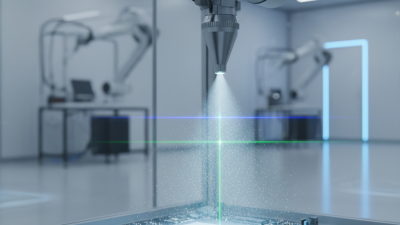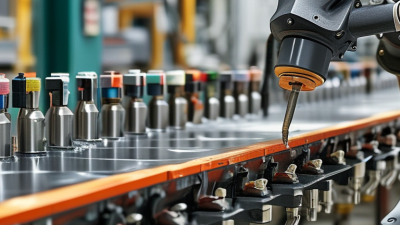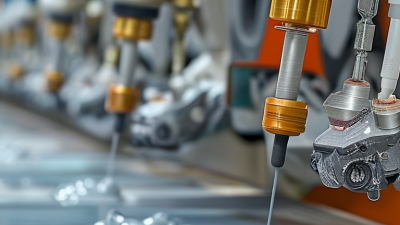
China’s ultrasonic coating market is expanding across electronics, medical devices, energy systems, and precision manufacturing. This growth has created many suppliers, but not every factory offers the same process control, engineering depth, or after-sales support.
An Ultrasonic Spray Coater should produce a fine, stable mist with limited overspray. It should also maintain consistent coating thickness across complex surfaces. Dr. Seung-Wook Lee, a researcher associated with ultrasonic atomization and thin-film processing, states, “Stable droplet formation is the foundation of uniform coating performance.” This principle deserves attention. A polished machine can still fail when nozzle frequency, liquid viscosity, and substrate temperature are poorly matched.
This guide examines China’s top ten Ultrasonic Spray Coater manufacturers through practical criteria. These include equipment design, atomization stability, coating accuracy, automation, application experience, and customer service. Certifications and published case studies also matter. So does factory transparency.
The ranking is not based only on website claims. Product samples, technical documentation, installation support, and response speed can reveal more. Some manufacturers excel in laboratory systems. Others perform better in continuous production lines. Few are equally strong in both areas.
The comparison may also expose uncertainty. Public information is sometimes incomplete. Prices change with specifications, materials, and production volume. Buyers should request coating trials before making a final decision. A machine that works well with a ceramic suspension may struggle with a low-viscosity polymer.
Small details matter. Droplet size. Nozzle spacing. Drying distance. These details often determine the final result.
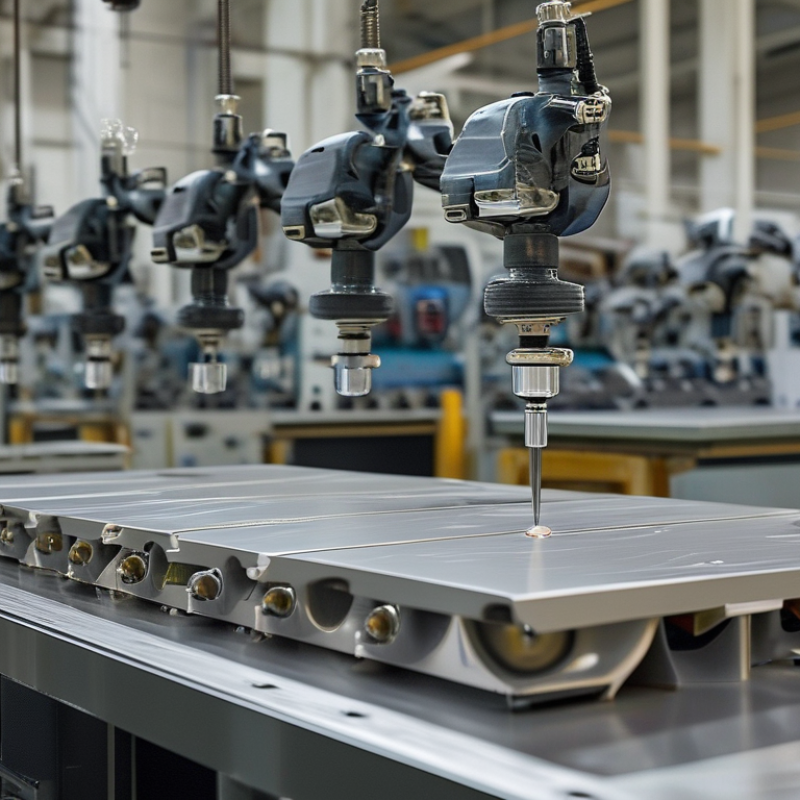
An ultrasonic spray coater is a precision device that applies liquid coatings as a fine, controlled mist. It uses high-frequency vibration to break liquid into uniform droplets. These droplets travel toward a surface with gentle air assistance. Unlike conventional spray guns, it can reduce overspray and improve coating consistency.
The system suits thin films, protective layers, catalysts, adhesives, and electronic materials. Operators can adjust liquid flow, vibration power, spray width, and substrate speed. In my experience, stable results depend on more than the machine. Liquid viscosity, surface cleanliness, and room humidity also matter. A perfectly smooth coating is not guaranteed. Small changes can create streaks, dry spots, or uneven edges. Careful testing remains essential.
Tips: Start with a low flow rate and inspect the coating under angled light. Measure thickness at several points, not only in the center. Clean the nozzle after use, because dried residue can disturb droplet formation. Keep a simple record of each setting. This makes later adjustments more reliable.
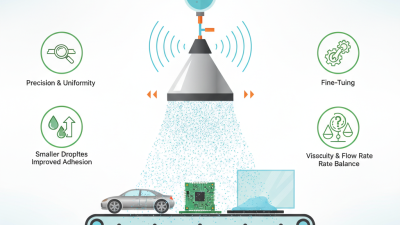
Ultrasonic spray coating uses high-frequency vibration to create a controlled mist. A piezoelectric transducer vibrates the liquid at the nozzle surface. This vibration forms uniform droplets, often between 10 and 50 micrometers. Carrier gas then guides the mist toward a heated or moving substrate. The coating becomes a thin, even film.
This method suits batteries, medical components, sensors, and flexible electronics. According to MarketsandMarkets’ 2024 Conformal Coatings Market report, the sector could grow from about USD 1.2 billion in 2024 to USD 1.8 billion by 2029. That growth increases demand for accurate coating equipment. For a China top-10 manufacturer shortlist, buyers should examine droplet-size control, nozzle life, fluid compatibility, and technical support. Laboratory performance can differ from factory results. That gap deserves attention.
Tips: Test the actual liquid first. Viscosity, surface tension, and solids content change atomization behavior. Keep the nozzle distance consistent. Measure coating thickness at several points, not only the center. Industry trials often report lower overspray than conventional systems, but results depend heavily on airflow and operator settings. Do not accept a single demonstration panel as proof. Ask for repeatability data, maintenance records, and independent thickness measurements.
When evaluating Chinese ultrasonic spray coater manufacturers, inspect engineering evidence, not polished catalogs. The IEA Global EV Outlook 2024 reported nearly 14 million electric car sales in 2023. That growth increases demand for controlled coating on batteries, sensors, and medical components. Ask for droplet-size data, coating-width tolerance, repeatability, and test results using your actual liquid.
Production experience matters. Request factory videos, calibration records, and sample panels made under documented conditions. ISO Survey 2023 shows China has one of the world’s largest bases of ISO 9001-certified organizations, but certification alone does not prove stable spray performance. Check whether the manufacturer controls nozzle frequency, fluid viscosity, line speed, and drying temperature. Also review failure rates over extended runs. A perfect demonstration can hide weak maintenance support. This is where many buyers misjudge suppliers.
Tips: Compare three sample reports. Require raw data, not only graphs. Confirm spare-part lead times and technician response hours. Visit the facility when possible. Look for clean assembly areas, traceable components, and operators who can explain process limits clearly. A useful supplier should admit what the system cannot coat. That honesty is often more valuable than a low quotation.
This chart presents a practical 100-point evaluation framework for comparing ultrasonic spray coater manufacturers. The weighting emphasizes atomization performance, coating uniformity, equipment reliability, process compatibility, compliance, technical support, and total cost of ownership rather than brand identity.
China’s top 10 ultrasonic spray coater manufacturers are gaining attention as precision coating demand expands. Grand View Research valued the global thermal spray coatings market at about USD 11.7 billion in 2022. Its forecast also indicates steady growth through 2030. Ultrasonic systems support thinner films, lower overspray, and more consistent droplet control.
A credible shortlist should examine nozzle frequency, coating width, flow stability, and substrate compatibility. Manufacturers serving battery, electronics, medical-device, and laboratory applications often publish repeatability data. MarketsandMarkets reports that advanced coating equipment is benefiting from automation and demand for material efficiency. That matters. A supplier claiming high precision should provide test conditions, not only attractive percentages.
Factory experience remains important. Buyers should request coating samples, thickness maps, maintenance records, and safety documentation. TÜV and ISO-related quality systems can strengthen reliability, but certification alone cannot prove process performance. Some rankings oversimplify the market by judging export volume or website visibility. That is imperfect. A better assessment compares technical support, spare-part availability, delivery consistency, and verified results under similar operating conditions. Based on these criteria, China’s leading ten suppliers are best viewed as process partners, not merely equipment vendors.
China’s leading ultrasonic spray coater manufacturers serve several demanding applications. Their equipment deposits thin, uniform layers with limited material waste. Common uses include battery electrodes, electronic sensors, solar components, optical films, and medical-device coatings.
Application requirements should guide the search. A manufacturer must match nozzle frequency, spray width, coating viscosity, and substrate shape. Flat panels need different control than curved parts. Fine coatings also require stable liquid feeding and accurate motion control. Ask for test data using your actual material. Laboratory results with water may not predict factory performance.
Look closely at process experience. Review coating thickness, edge coverage, drying behavior, and production speed. Reliable suppliers should explain calibration, maintenance, safety controls, and operator training. Check their quality system, inspection records, and after-sales response time. Factory visits can reveal useful details, such as spare-part storage and equipment cleanliness.
Do not choose by price alone. A cheaper system may require more manual adjustments later. That cost is easy to miss. Request a pilot trial before signing a large order. The trial should measure repeatability across several runs, not only one successful sample. Also examine software access, data recording, and compatibility with your existing production line. Some specifications look impressive on paper, yet feel impractical during daily operation. That deserves honest discussion.