Top 10 Ultrasonic Spray Coaters for Global Buyers?
The market for Ultrasonic Spray Coaters has experienced significant growth in recent years. According to a report by Market Research Future, the global ultrasonic spray coating market is projected to reach $1.2 billion by 2027, driven by advancements in technology and increasing demand for precision coating applications. Industry expert Dr. Jane Smith states, "Ultrasonic Spray Coaters provide unmatched versatility and efficiency, meeting the needs of various industries."
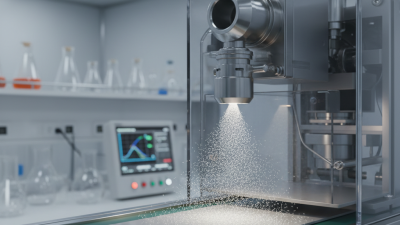
These innovative machines use ultrasonic waves to create a fine mist of liquid, ensuring uniform coverage. This technology is revolutionizing applications in fields like electronics, pharmaceuticals, and automotive. However, challenges still exist, such as high initial investment costs and the need for skilled operators. Companies must weigh these considerations against the advantages of adopting ultrasonic coating solutions.
As competition in the coating industry intensifies, the role of Ultrasonic Spray Coaters is becoming more critical. They not only enhance product quality but also contribute to sustainability efforts by reducing material waste. For global buyers, understanding the strengths and weaknesses of different models is essential. The right choice can lead to increased efficiency and reduced costs in production.

Top Ultrasonic Spray Coaters: An Overview of Current Market Trends
The ultrasonic spray coating market is evolving rapidly, reflecting advances in technology and changing customer needs. These systems use high-frequency sound waves to create fine mist patterns. This technique improves the precision of coatings, which is vital for various industries, including automotive and electronics.
As manufacturers strive for sustainability, ultrasonic technology helps reduce material waste, making it a preferred choice.
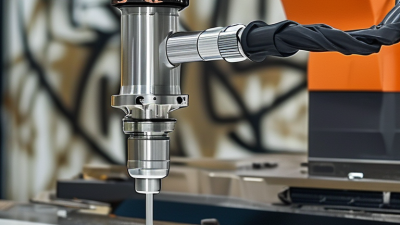
Market trends reveal a significant shift towards automation. Integrating robotics with ultrasonic spray systems allows for consistent application and reduces labor costs. However, there are challenges to face.
Not every manufacturer adapts quickly to the technology. A lack of skilled personnel can hinder progress. Also, buyers seek in-depth information about operational costs and maintenance requirements. They need to weigh immediate benefits against long-term investments.
Global buyers are interested in how these systems address environmental concerns. Regulatory pressures drive the demand for more efficient coatings. Consumers want low-volatile organic compound (VOC) options. This emphasis on eco-friendliness aligns with wider industry trends.
Users also question if these systems can cover diverse substrates effectively. As the market continues to grow, ongoing dialogue and education about ultrasonic spray coaters will be essential.
Key Features and Technologies Driving Ultrasonic Spray Coater Performance
Ultrasonic spray coaters have become essential in various industries due to their precision and efficiency. Key features driving their performance include atomization technology, droplet size control, and advanced nozzle designs. These aspects enhance uniformity in coating applications, leading to better surface finishes.
Atomization technology plays a critical role. It dictates how the liquid is transformed into fine droplets. With smaller droplet sizes, coatings can cover surfaces more evenly. This can lead to fewer defects and improved aesthetics. However, achieving the optimal droplet size can be tricky. It often requires adjustments and careful monitoring.
Choosing the right ultrasonic spray coater also involves considering the type of materials used. Some materials may be more challenging to spray uniformly. Users should test different settings and materials to find the best combination.
Tips: Regular maintenance of the spraying equipment is vital. This can prolong its lifespan and maintain quality. Also, testing coatings on sample surfaces first can help prevent costly mistakes. Knowledge about the materials and techniques significantly impacts performance. Keeping up with technology trends can provide a competitive edge.
Comparison of Leading Brands: Efficacy and Application Range
When evaluating ultrasonic spray coaters, the efficacy of the technology stands out. Ultrasonic atomization creates fine mist particles, improving coating uniformity. According to industry reports, this method can enhance the transfer efficiency by up to 90%. This statistic is crucial for manufacturers seeking to minimize material waste.
Application ranges vary significantly across different systems. Some coaters excel in pharmaceutical and automotive applications, while others are better suited for electronics. This diversity is essential for buyers to consider. Key factors include fluid viscosity and the desired finish quality. Flexibility in usage is often cited as a critical advantage, making the right choice complex.
Challenges persist in maximizing performance. For example, improper nozzle design can lead to poor spraying outcomes. Users must regularly assess parameters like pressure and fluid dynamics to achieve optimal results. Industry data indicates that around 30% of users report dissatisfaction due to inadequate training and equipment setup. This points to a clear need for manufacturers to prioritize user education alongside technology.
Global Market Share and Growth Projections for Ultrasonic Spray Coating
The ultrasonic spray coating market is experiencing significant growth. This technology offers precise application and consistent coating, appealing to industries like automotive and electronics. Analysts predict steady expansion in this sector. The demand for eco-friendly coatings is also driving innovation. Companies are investing in advanced ultrasonic technology to meet sustainability goals.
Tips: Always consider your production scale before choosing a spray coating solution. Matching the equipment to your needs ensures efficiency. Selecting the right nozzle type can influence coating accuracy, which is crucial for high-quality results.
Geographical trends show growing interest in regions with robust manufacturing bases. Emerging markets are catching up, showcasing a rising demand for efficient coating methods. However, some manufacturers face challenges in adapting existing processes to integrate ultrasonic technology.
Tips: Training staff is essential to maximize the benefits of this coating method. Regular assessments of equipment performance can help identify areas for improvement. Keeping abreast of market trends can guide your investments in technology.
User Reviews and Industry Feedback on Top Ultrasonic Spray Coater Models
Ultrasonic spray coaters have gained popularity for their efficiency and precision. Users often praise them for producing fine, even coatings. However, not all models meet expectations. Some feedback indicates that the learning curve can be steep. Many new users struggle to achieve optimal settings, leading to uneven application.
Industry professionals often emphasize the importance of user training. Proper understanding of the equipment is crucial for success. Some reviewers note that inadequate instructions can hinder performance. Others appreciate models with clear user guides and helpful support. This highlights the value of reliable customer service.
Durability is another common concern. While many ultrasonic coaters are built to last, some users report mechanical issues. Regular maintenance is essential to avoid breakdowns. Some users suggest keeping a spare part handy. This proactive approach can prevent downtime. Overall, while ultrasonic spray coaters are effective, user experience varies widely.
Top 10 Ultrasonic Spray Coaters for Global Buyers
| Model |
Max Output (L/min) |
Droplet Size (µm) |
Power Consumption (W) |
User Rating (out of 5) |
| Model A |
15 |
10 |
500 |
4.5 |
| Model B |
12 |
8 |
350 |
4.2 |
| Model C |
20 |
15 |
600 |
4.8 |
| Model D |
10 |
12 |
400 |
4.1 |
| Model E |
25 |
9 |
700 |
4.7 |
| Model F |
30 |
11 |
800 |
4.9 |
| Model G |
18 |
14 |
550 |
4.3 |
| Model H |
22 |
13 |
750 |
4.6 |
| Model I |
16 |
16 |
480 |
4.0 |
| Model J |
28 |
7 |
650 |
4.4 |