China’s manufacturing sector offers a broad range of industrial coating equipment, but choosing a dependable supplier requires more than comparing catalog prices. This guide introduces ten leading Chinese manufacturers associated with the Automatic Spray Coating Machine market. It focuses on practical evidence, including production experience, equipment design, quality control, and after-sales support.
The evaluation considers spray uniformity, conveyor stability, PLC control systems, booth dimensions, curing compatibility, and coating material efficiency. Details such as stainless-steel construction, adjustable spray guns, filter access, and emergency-stop controls can strongly influence daily operation. A reliable supplier should also explain installation requirements, maintenance schedules, spare-part availability, and operator training clearly.
Public certifications and export records can provide useful references. However, they should not replace factory audits or sample testing. A machine may perform well on metal panels but produce different results on plastic, glass, or irregular components. That difference matters.
No ranking is perfect. Manufacturer capabilities, product models, and service policies may change over time. Buyers should verify current certificates, inspection reports, delivery terms, and warranty conditions before signing an agreement. Technical discussions should include coating thickness, line speed, permissible workpiece size, air consumption, and expected production volume.
This overview is designed for procurement teams, engineers, and factory owners seeking a balanced starting point. It does not treat visibility as proof of quality. Instead, it compares manufacturers through practical criteria and documented information, while recognizing that some public data remains incomplete. Site visits and controlled trials are still wise.
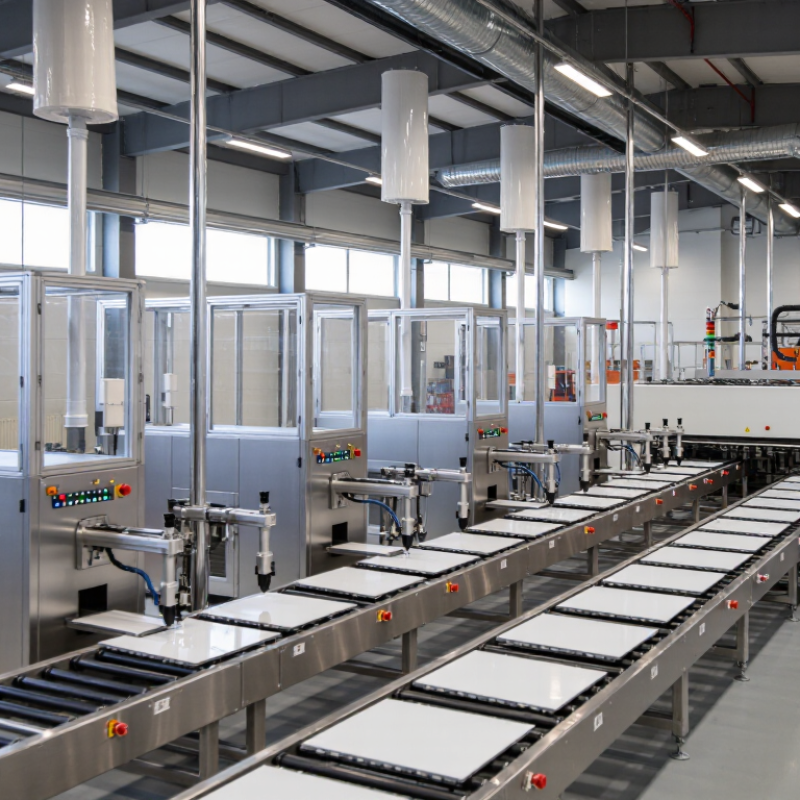
What Defines an Automatic Spray Coating Machine Manufacturer?
A credible automatic spray coating machine manufacturer builds more than a cabinet, pump, and spray gun. It engineers a stable process. The machine should control flow rate, atomizing pressure, spray distance, conveyor speed, and curing conditions. These settings must remain repeatable across shifts. That matters because the International Federation of Robotics reported 541,302 industrial robots installed worldwide in 2023. Modern coating equipment must connect reliably with robotic cells, sensors, and factory software.
Energy performance also separates a serious manufacturer from a basic equipment assembler. The U.S. Department of Energy notes that compressed air can represent about 10% of industrial electricity use. Poorly tuned spray systems may waste air, coating material, and production time. A capable supplier therefore measures transfer efficiency, overspray, maintenance intervals, and cleaning losses. It should provide test panels, process records, electrical documentation, and operator training. Real evidence matters.
Standards are not decoration.
Manufacturers should design around risk assessment, guarding, emergency stops, and documented quality procedures. ISO 12100 supports machinery safety principles, while ISO 9001 helps structure consistent production and corrective action. Still, certification alone proves little. I would inspect nozzle wear, software recovery after faults, spare-part availability, and coating results under changing humidity. Some suppliers publish impressive specifications but avoid difficult factory trials. That weakness deserves attention. A reliable manufacturer welcomes measurable testing, admits process limits, and improves the design when field data exposes a problem.
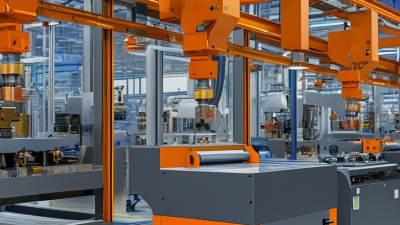
Transfer efficiency is a practical benchmark for evaluating automated spray-coating solutions. Higher efficiency generally means better material utilization and lower overspray.
Automatic spray-coating manufacturers are commonly assessed by their ability to integrate high-efficiency spray technology with robotic motion control, precise flow regulation, conveyor synchronization, enclosure ventilation, curing systems, safety interlocks, and repeatable coating quality. The ranges shown are typical industry values; actual performance depends on coating material, workpiece geometry, nozzle selection, operator settings, and system design.
China’s Top 10 Automatic Spray Coating Machine Manufacturers are often judged by engineering depth, production control, and after-sales support. A strong manufacturer should provide stable spray patterns, accurate motion control, and repeatable film thickness. These details matter on metal panels, plastic housings, and irregular industrial parts.
In practical factory visits, I would inspect nozzle adjustment, conveyor alignment, booth airflow, and curing compatibility. Test samples reveal more than polished brochures. Ask for coating thickness data, transfer efficiency results, and maintenance records. Reliable suppliers explain overspray recovery, filter replacement, and emergency stop functions clearly. They should also support operator training and provide readable technical documents. Safety cannot be treated as an optional feature.
A top-ten list still needs caution. Rankings can change with project size, delivery time, and service location. My assessment may favor manufacturers with stronger technical transparency, not merely lower prices. That approach is imperfect. Some smaller producers may offer better customization for unusual workpieces. Buyers should compare factory evidence, sample results, warranty terms, and spare-parts availability before signing. A well-built machine should run quietly, keep its spray distance consistent, and leave minimal buildup around the booth. Small defects become expensive after months of production.
| Rank | Anonymized Manufacturer Profile | Primary Machine Type | Supported Coating Processes | Automation Scope | Typical Workpieces | Spray Technology | Line Integration | Typical Production Scale | Common Application Industries |
|---|---|---|---|---|---|---|---|---|---|
| 1 | Manufacturer Profile 01 | Automatic reciprocating spray booth and conveyor line | Liquid paint Water-based coating Solvent-based coating | Fully automatic spraying, curing transfer, and recipe control | Metal panels, cabinets, frames, doors, and fabricated components | Air spray and air-assisted airless spray | Conveyor, drying oven, filtration, and PLC integration available | Medium to high-volume batch production | Automotive components, appliances, furniture, and general metalwork |
| 2 | Manufacturer Profile 02 | Multi-axis robotic spray coating cell | Liquid paint Protective coating Decorative finish | Robot motion programming with automatic gun triggering | Irregular housings, castings, tubes, and three-dimensional parts | Electrostatic, conventional air, and HVLP spray | Turntables, positioners, reciprocators, and visual inspection can be integrated | Flexible medium-volume production | Machinery, transportation equipment, electrical enclosures, and hardware |
| 3 | Manufacturer Profile 03 | Automatic powder coating production line | Thermoset powder Epoxy-polyester powder | Automatic powder application, recovery, and oven curing | Aluminum profiles, steel frames, racks, brackets, and hardware | Electrostatic powder spray | Pretreatment, conveyor, powder booth, recovery unit, and curing oven | High-volume continuous production | Construction materials, furniture, appliances, lighting, and industrial equipment |
| 4 | Manufacturer Profile 04 | Automatic spray painting line for automotive parts | Primer Basecoat Clearcoat | Programmable multi-stage spraying with controlled flash-off | Bumpers, trim components, plastic housings, and metal parts | Electrostatic liquid spray and rotary atomization | Pre-treatment, paint kitchen, flash-off zone, curing oven, and conveyor control | High-volume repeat production | Automotive, motorcycle, commercial vehicle, and transport components |
| 5 | Manufacturer Profile 05 | Automatic reciprocator coating system | Liquid coating UV coating Protective finish | Fixed-path automatic spraying with adjustable stroke and speed | Flat panels, furniture parts, boards, profiles, and sheet components | Airless, air-assisted airless, and HVLP spray | Conveyor, spray booth, exhaust system, and curing equipment | Medium-volume standardized production | Furniture, interior products, building materials, and wood processing |
| 6 | Manufacturer Profile 06 | Automatic coating system for small precision parts | Liquid paint Insulating coating Anti-corrosion coating | Indexed loading, programmed spray cycles, and automatic unloading | Fasteners, electronic housings, small castings, and precision hardware | Fine atomization air spray and electrostatic spray | Rotary indexing table, small booth, filtration, and curing module | Small-part batch and mass production | Electronics, electrical equipment, hardware, instruments, and machinery |
| 7 | Manufacturer Profile 07 | Automatic coating line for aluminum profiles | Powder coating Fluorocarbon coating Liquid finish | Continuous profile handling with automatic spray and curing control | Aluminum extrusions, window profiles, curtain-wall components, and rails | Electrostatic powder and liquid spray | Pretreatment, drying, conveyor, booth, recovery, and curing oven | High-volume continuous production | Construction, architectural aluminum, transportation, and solar structures |
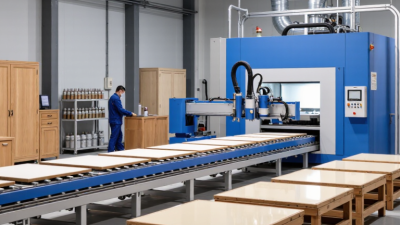
| 8 | Manufacturer Profile 08 | Automatic spray coating equipment for wood products | Water-based lacquer UV coating Wood stain | Automatic feeding, spray application, leveling, and curing | Cabinet doors, flooring, panels, furniture components, and moldings | Air spray, airless spray, and high-speed reciprocating spray | Feeding system, sanding interface, UV or thermal curing, and conveyor control | Medium to high-volume panel production | Furniture, flooring, cabinetry, interior decoration, and wood products |
| 9 | Manufacturer Profile 09 | Automatic coating cell for large industrial structures | Anti-corrosion coating Epoxy coating Polyurethane coating | Programmable motion control with manual-assisted loading options | Steel structures, tanks, machinery frames, pipes, and heavy components | Airless and air-assisted airless spray | Booth ventilation, paint supply, lifting equipment, and curing support can be integrated | Low to medium-volume large-part production | Heavy machinery, energy equipment, steel fabrication, marine, and infrastructure |
| 10 | Manufacturer Profile 10 | Customized turnkey automatic spray coating system | Liquid coating Powder coating Specialty coating | Modular automation configured for product geometry and output requirements | Mixed-size components, custom assemblies, enclosures, and engineered products | Electrostatic, HVLP, airless, and robotic spray options | Material handling, pretreatment, spraying, curing, inspection, and data monitoring | Custom batch or continuous production | Industrial manufacturing, appliances, renewable energy, transportation, and metal fabrication |
Automatic spray coating equipment now combines robotic motion, sensor feedback, and controlled atomization. The International Federation of Robotics reported 276,288 industrial robots installed in China during 2023. This figure represented about 51% of global installations. The number shows why robotic coating lines are gaining attention in Chinese factories.
Electrostatic spraying remains a core technology. It charges paint particles, helping them follow grounded workpieces and reducing material loss. High-volume, low-pressure spray systems provide another practical option. They create larger droplets and usually limit overspray compared with conventional high-pressure guns. Airflow sensors are also important. They monitor booth pressure, filter loading, and exhaust stability in real time.
Modern systems use machine vision to detect edges, holes, and uneven surfaces. A controller can then adjust gun speed, distance, and spray width. Some lines combine six-axis robots with reciprocators for large panels and complex housings. Closed-loop flow meters improve color consistency. However, calibration still matters more than software claims. A dirty nozzle can ruin a precise program quickly.
Industry reports often highlight automation’s productivity benefits, but actual results depend on coating viscosity, part geometry, and operator training. This is the uncomfortable point. A faster robot does not guarantee a better finish. Buyers should test transfer efficiency, film thickness variation, curing performance, and maintenance time before selecting equipment. Those measurements provide more reliable evidence than brochure language.
China’s automatic spray coating machine sector deserves careful comparison, not a simple price ranking.
MarketsandMarkets estimates the industrial coatings market could grow from about USD 88 billion in 2024 to USD 112 billion by 2029. That growth increases supplier competition, but catalog claims can remain difficult to verify.
Ask each manufacturer for a recorded factory acceptance test using your actual workpiece, coating, and target film thickness. Check coating uniformity at corners, transfer efficiency, conveyor speed, curing temperature, and automatic gun positioning. Measure the details. A machine producing 20 parts per minute may still waste material through overspray or frequent cleaning.
Grand View Research reports continued expansion in powder coatings, driven partly by demand for efficient and lower-waste finishing processes. Therefore, compare powder recovery rates, filter replacement intervals, energy consumption, and control-system repeatability. Request three months of operating data from a comparable installation, not only laboratory results.
Review electrical drawings, software backups, spare-part lists, and remote-service response times. ISO 9001 certification supports process control, but it does not prove machine performance. Not just price.
A practical comparison should include total cost over five years.
Add installation, training, maintenance, rejected parts, compressed air, and consumables. I would not trust a polished video alone. One weakness remains: suppliers may provide incomplete energy or downtime figures. Put every promised value into the contract, then verify it during acceptance testing.
China Top 10 Automatic Spray Coating Machine Manufacturers?
Choosing among China’s leading automatic spray coating machine manufacturers requires more than comparing rankings. Examine their practical experience with your product size, coating material, and production speed. A supplier may display impressive equipment, yet lack experience with curved parts or heat-sensitive surfaces. Ask for documented case studies, test videos, and measurable coating results.
Technical capability matters. Check spray accuracy, conveyor stability, curing control, sensor quality, and software flexibility. Request information about transfer efficiency, coating thickness variation, and daily maintenance needs. A reliable manufacturer should explain these details clearly, not hide behind broad claims. Confirm whether engineers can support installation, operator training, spare-part supply, and remote diagnosis. Communication can reveal more than a polished showroom.
Tips: Send sample parts before signing a contract. Request a complete trial report with coating thickness, rejection rates, cycle time, and energy use. Visit the factory if possible, and inspect assembly areas, testing records, and quality controls. Also review warranty terms carefully. Cheap equipment can become expensive when cleaning takes longer than production. I once underestimated operator training during a line assessment; the machine performed well, but inconsistent setup reduced the real output. That mistake still matters. Ask how the manufacturer handles failures, design changes, and delayed components. Choose evidence over promises.