Choosing a reliable Spray Coating Machine manufacturer in China requires more than comparing factory prices. Buyers should examine engineering experience, coating consistency, equipment durability, and after-sales support. This guide introduces leading Chinese manufacturers through practical purchasing criteria, not promotional claims alone.
A capable supplier should explain spray pressure, nozzle options, conveyor speed, curing conditions, and compatible coating materials. Ask for sample testing before placing a large order. A factory visit can reveal useful details, including machine cleanliness, wiring quality, assembly methods, and testing procedures. Small signs matter.
Look for documented quality systems, clear technical drawings, export experience, and responsive service teams. Manufacturers serving automotive, furniture, electronics, and metal industries may offer different strengths. Their equipment should match your production volume, part shape, coating thickness, and available workshop space. A compact line may suit prototypes, while automated systems require careful planning.
No shortlist is flawless. Supplier information can change quickly. Some online descriptions also sound stronger than the evidence supports. Therefore, verify certifications, customer references, lead times, spare-part access, and warranty terms directly. A trustworthy manufacturer should answer technical questions clearly and admit equipment limitations when necessary. That honesty is valuable.
This overview focuses on manufacturers that demonstrate practical capability, consistent communication, and measurable production value. It also considers customization, operator safety, maintenance demands, and total ownership cost. The best choice is rarely the cheapest quotation. It is the partner that can deliver stable results and support your process after installation.
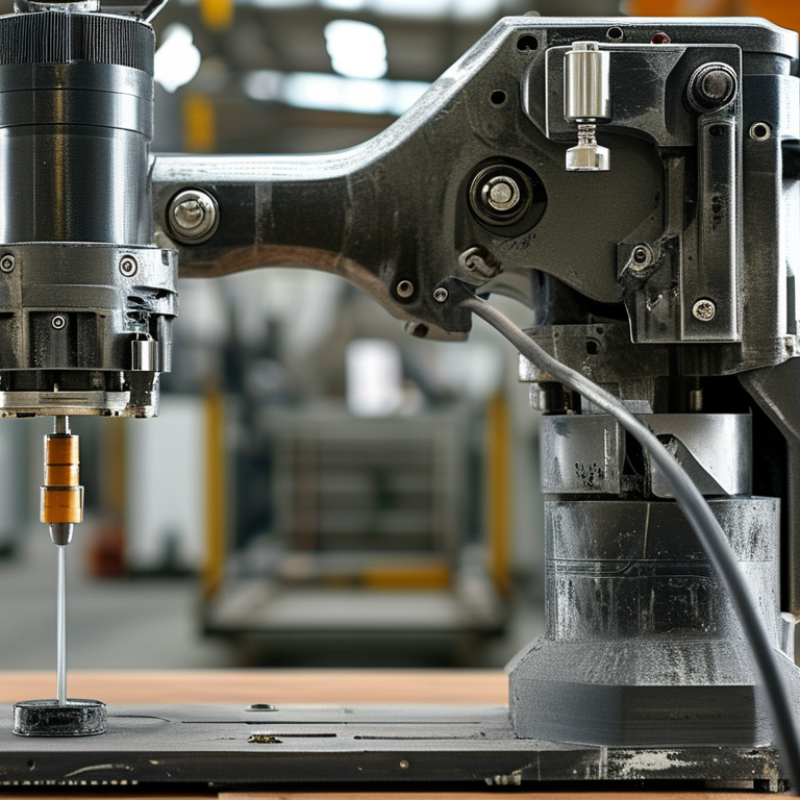
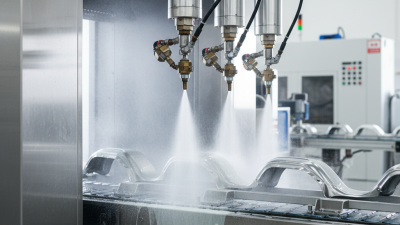
A spray coating machine is industrial equipment that applies liquid material to a surface through a controlled spray. It may use compressed air, airless pressure, or electrostatic force. The coating can be paint, protective resin, adhesive, or another approved liquid. Its purpose is simple: create an even layer with less waste and labor.
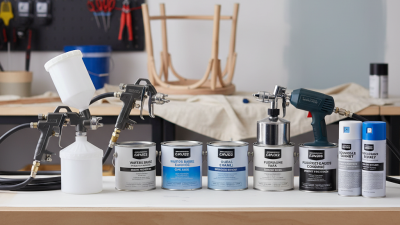
A typical machine includes a material tank, pump, spray gun, control panel, and drying area. Operators adjust pressure, flow rate, nozzle size, and travel speed. These settings affect thickness, texture, and overspray. For example, a narrow nozzle may suit small metal parts, while a wider pattern covers panels faster. Good machines also support cleaning and quick color changes. This detail is often underestimated.
When comparing spray coating machine manufacturers in China, buyers should examine testing records, component quality, safety controls, and after-sales support. Ask for coating samples on your actual material. A polished demonstration may hide production problems. Humidity, surface preparation, and operator skill can change the result. I would also check whether replacement parts are clearly identified and available. Some specifications look impressive, but daily maintenance may be inconvenient. That weakness matters. A reliable evaluation should include coating uniformity, transfer efficiency, noise, cleaning time, and long-term operating costs. Equipment that works well for one factory may perform poorly in another.

Evaluating Chinese spray coating machine manufacturers requires more than comparing online prices. Start with the application: coating material, workpiece size, production speed, spray width, and required film thickness. Ask for test panels using your actual material. The results should show coverage, overspray, surface finish, and coating consistency.
A reliable manufacturer provides clear technical drawings, machine dimensions, electrical requirements, and maintenance schedules. Request records for key components, factory inspection procedures, and final performance testing. A video call can reveal useful details, such as assembly cleanliness, cable routing, and spare-parts storage. Better still, arrange an independent factory audit or visit the production site. References matter. Contact similar users and ask about downtime, response speed, training, and replacement-part availability.
Do not judge quality from appearance alone. A polished machine can still hide weak process control. Compare warranty terms, installation support, operator training, packaging, and long-term service costs. Check whether manuals are practical, with photographs and troubleshooting steps. Ask how the manufacturer handles coating defects after delivery. No supplier is perfect. I would record every promise in the contract, because informal assurances are easy to misunderstand. One more point deserves attention: a low purchase price may become expensive when calibration, consumables, and delayed support are included. Choose the manufacturer that explains limitations clearly, not merely the one offering the fastest quotation.
Leading Spray Coating Machine Manufacturers in China
China has become a major source of spray coating equipment for automotive parts, furniture panels, electronics, and industrial components. Reliable manufacturers usually offer complete solutions, including spray guns, conveyor systems, curing units, control cabinets, and exhaust filtration. Their technical strength should be measured through coating consistency, transfer efficiency, maintenance access, and production stability, not only through attractive pricing.
During supplier evaluation, inspect the factory’s testing area and request samples using your actual material. Check film thickness at several points, surface gloss, overspray, and drying time. Ask for electrical drawings, spare-parts lists, installation procedures, and operator training details. A serious manufacturer can explain nozzle selection, air pressure, pump capacity, and booth airflow clearly. They should also provide documented quality checks and realistic delivery schedules. No supplier is perfect. Some machines look advanced but require difficult calibration, which can increase downtime.
Tips: Compare three technical proposals, not just quotations. Confirm the coating material, workpiece size, target output, and local voltage before requesting a final design. A common mistake is choosing a machine before testing the coating formula. Factory references also matter, but older installations may not reflect current production quality. Verify recent projects, service response times, and warranty conditions in writing. The best equipment is not always the fastest; it should be safe, maintainable, and suitable for daily operating conditions.
This chart compares typical coating transfer-efficiency benchmarks associated with major spray technologies used in industrial equipment. Higher transfer efficiency generally indicates better material utilization and lower overspray, while actual results depend on coating material, equipment configuration, operator technique, and production conditions.
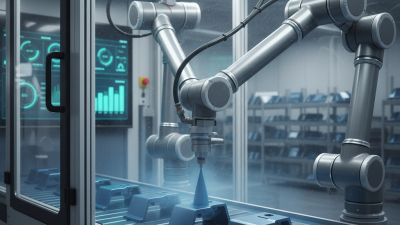
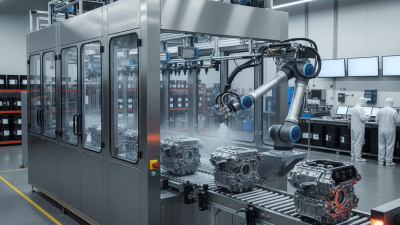
Chinese manufacturers increasingly supply complete spray coating lines, not only standalone guns. Common products include automatic reciprocators, six-axis robots, spray booths, curing ovens, and conveyor systems. Many factories also produce manual HVLP equipment for small workshops. Product selection depends on coating viscosity, panel size, and daily output. A serious supplier should provide test spraying with the customer’s actual material.
Electrostatic spray systems are widely offered for metal parts. They improve transfer efficiency when grounding, fluid flow, and booth airflow are controlled correctly. Powder coating lines may include pretreatment tanks, drying ovens, recovery units, and cartridge filters. Liquid systems often use diaphragm pumps, pressure tanks, or rotary atomizers. Touchscreen controls can record pressure, temperature, and conveyor speed. These records make process checks easier.
Technology quality varies between suppliers. Some manufacturers offer vision-guided robots, quick-change color systems, and remote diagnostics. Others focus on durable mechanical designs with simpler controls. Both approaches can work. During factory visits, inspect welds, cable protection, filter access, and spare-part storage. Ask for energy data and coating thickness results, not broad promises. A recurring weakness is incomplete documentation after installation. Operators may need extra training. That detail matters more than polished catalog images. Reliable suppliers explain limitations, support commissioning, and adjust nozzle sizes after real production trials.
| Machine Category | Primary Coating Process | Key Products Offered | Core Technologies | Typical Materials | Common Applications | Typical Automation Features |
|---|---|---|---|---|---|---|
| Automatic Air Spray Systems | Compressed-air atomization of liquid coatings | Reciprocating spray machines Inline spray lines Multi-gun systems | PLC control, adjustable spray width, synchronized gun movement, closed-loop conveyor operation, and programmable coating recipes | Water-based paint, solvent-based paint, varnish, primer, and protective coatings | Furniture panels, metal cabinets, doors, automotive components, and general industrial parts | Automatic part detection, conveyor indexing, gun triggering, and recipe storage |
| Airless and Air-Assisted Airless Machines | High-pressure fluid atomization with or without compressed air assistance | High-pressure spray units Pump-fed coating systems Heavy-duty spray lines | High-pressure diaphragm or piston pumps, pressure regulation, wear-resistant fluid paths, and controlled flow delivery | Thick protective coatings, epoxy, polyurethane, anticorrosion coatings, and high-solids materials | Steel structures, pipelines, machinery housings, construction equipment, and marine components | Digital pressure control, automatic pump circulation, fluid filtration, and spray-pressure monitoring |
| Electrostatic Spray Systems | Electrically charged coating particles attracted to grounded workpieces | Electrostatic liquid sprayers Rotary atomizer systems Automatic electrostatic booths | High-voltage charging, current limiting, electrostatic field control, grounding monitoring, and adjustable atomization | Solvent-based and water-based liquid coatings formulated for electrostatic application | Metal furniture, appliances, automotive parts, electrical enclosures, and tubular components | Automatic voltage adjustment, workpiece grounding detection, interlocked spray booths, and coating recipe control |
| Powder Coating Lines | Electrostatic application of dry powder followed by heat curing | Powder spray booths Cyclone recovery systems Cartridge-filter recovery systems Curing ovens | Corona or tribo charging, powder recovery, automatic color-change systems, temperature-controlled ovens, and conveyor integration | Epoxy, polyester, epoxy-polyester hybrid, and polyurethane powder coatings | Aluminum profiles, appliances, metal furniture, automotive parts, lighting products, and architectural components | Automatic reciprocators, powder-flow control, booth cleaning programs, oven temperature recording, and conveyor synchronization |
| UV Spray Coating Equipment | Spray application followed by ultraviolet curing | UV coating spray machines UV curing tunnels Flat-panel coating lines | Low-overspray spray control, UV lamp or LED-UV curing, coating-thickness control, and temperature management | UV primers, UV topcoats, clear finishes, and ultraviolet-curable protective coatings | Wood panels, plastic components, flooring, decorative surfaces, and electronic parts | Automatic lamp power control, conveyor-speed adjustment, exhaust monitoring, and curing parameter logging |
| Robotic Spray Painting Cells | Programmed spraying with articulated industrial robots | Single-robot cells Dual-robot systems Positioner-integrated cells Complete spray booths | Robot path programming, constant gun-to-part distance, coordinated axes, automatic gun cleaning, and collision protection | Liquid paints, primers, clearcoats, adhesives, and selected protective coatings | Automotive bodies and parts, fabricated metal products, plastic components, and complex three-dimensional workpieces | Vision-assisted positioning, automatic color change, part identification, spray-path optimization, and production-data collection |
| Rotary Disc and Bell Atomizer Systems | High-speed rotary atomization for uniform coating distribution | Rotary bell systems Rotary disc machines High-speed automatic coaters | Adjustable rotational speed, shaping-air control, electrostatic assistance, and fine droplet-size management | Automotive paints, clearcoats, primers, and industrial liquid coatings | Automotive bodies, wheels, appliances, metal panels, and high-volume manufactured parts | Automatic flow-rate adjustment, high-speed shaping-air control, color-change modules, and robot integration |
| Small-Part and Batch Spray Machines | Manual, semi-automatic, or indexed automatic spraying | Turntable spray machines Batch coating booths Small-component systems | Rotating fixtures, adjustable spray guns, compact filtration, timed spray cycles, and modular booth construction | Paint, lacquer, varnish, primer, adhesive, and functional surface coatings | Hardware, handles, lighting parts, plastic components, consumer goods, and laboratory-scale production | Foot-pedal or PLC operation, automatic indexing, fixture rotation, spray-cycle timing, and basic exhaust interlocks |
| Surface Preparation and Pretreatment Equipment | Cleaning, degreasing, rinsing, drying, or abrasive preparation before coating | Spray pretreatment tunnels Phosphating lines Rinse and drying systems Blasting equipment | Multi-stage spray zones, chemical dosing, filtration, bath circulation, air knives, and controlled drying | Alkaline cleaners, conversion coatings, rinse water, and corrosion-inhibiting treatments | Steel, aluminum, galvanized parts, appliances, automotive components, and architectural products | Automatic chemical dosing, conductivity or pH monitoring, liquid-level control, filtration alarms, and conveyor coordination |
| Environmental and Recovery Systems | Overspray capture, air filtration, solvent management, and coating-material recovery | Dry-filter booths Water-wash booths Exhaust and ventilation units Powder recovery units | Multi-stage filtration, negative-pressure booth control, explosion-resistant electrical design, and powder or paint recovery | Liquid paint overspray, powder coating particles, solvent vapors, and waterborne coating residues | Industrial coating plants, automotive facilities, furniture factories, and metal-product manufacturing | Differential-pressure monitoring, filter alarms, airflow control, automatic booth cleaning, and safety interlocks |
Choosing a Chinese spray coating machine manufacturer should begin with your coating process, not a catalog photo. Define the substrate, coating material, target thickness, line speed, booth size, and acceptable overspray. Ask for a trial using your actual panels. A serious supplier should measure transfer efficiency, film uniformity, curing results, and cleaning time. Request test records, drawings, electrical specifications, and a clear list of included components. These details reveal engineering discipline better than polished sales language.
Tips: Compare at least three factories. Check whether they build key systems internally or outsource them. Ask for references from similar applications, not only famous installations. Confirm operator training, spare-part availability, remote troubleshooting, and response times in writing. Inspect weld quality, cable routing, filters, pumps, and safety interlocks during a video or factory visit. Do not accept vague promises about delivery or performance.
Price matters, but total operating cost matters more. Calculate energy use, coating waste, maintenance hours, and replacement parts over one year. Verify compliance documents for your destination and ask who handles export testing. A reliable manufacturer explains limitations without hiding them. I have seen projects fail because buyers tested only speed, then discovered difficult color changes and long cleaning cycles. That mistake is easy to repeat. Leave room for improvement, and make every assumption measurable before signing.