Leave Your Message
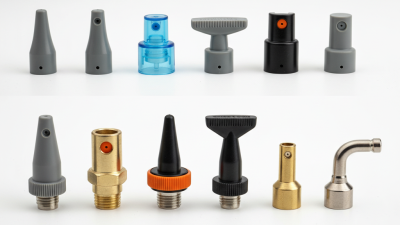
Industrial Spray Nozzles can quietly determine how efficiently a production line performs. They control spray angle, droplet size, coverage, pressure, and liquid consumption. In practice, these details affect cleaning quality, cooling consistency, coating uniformity, and operating costs.
Experienced maintenance teams often notice the difference at the nozzle tip. A properly selected nozzle can produce an even fan across a conveyor, while a worn nozzle leaves visible dry strips. Engineers usually compare flow rate, pressure range, material compatibility, and spray pattern before making a decision. Manufacturer testing data also helps confirm performance under realistic operating conditions, rather than relying only on catalog images.
Reliability matters.
A durable nozzle may reduce unplanned stoppages and replacement labor. Stainless steel, ceramic, or engineered polymer options can suit different temperatures, chemicals, and production environments. However, no material is perfect. Incorrect pressure, poor filtration, or careless installation can shorten service life quickly. This is where practical inspection becomes valuable. Operators should check spray patterns regularly and record changes over time.
Choosing Industrial Spray Nozzles is therefore more than selecting the lowest purchase price. It involves matching equipment to the process, verifying technical claims, and considering long-term maintenance. A small improvement in droplet control may reduce waste, but results depend on proper setup. Careful evaluation creates a more dependable system and gives businesses stronger control over quality, safety, and operational expenses.
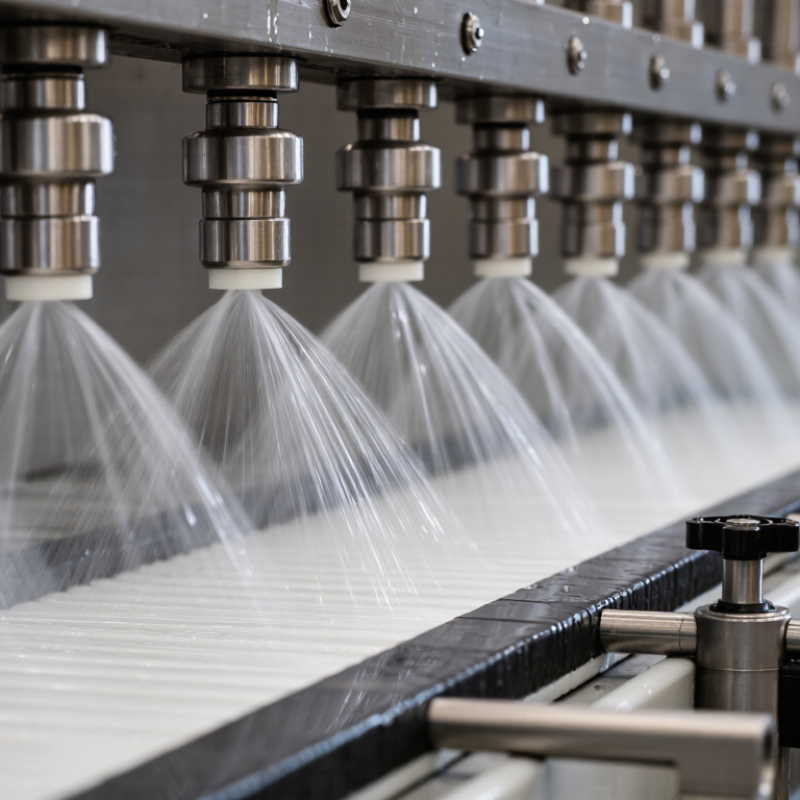
Industrial spray nozzles control how liquid leaves a system. Inside each nozzle, a passage guides the liquid toward a small opening. Pressure, flow rate, and opening geometry shape the spray. The result may be a fine mist, a flat fan, a solid stream, or a hollow cone. Air-assisted designs use moving air to break liquid into smaller droplets. Different patterns suit different tasks, such as rinsing a surface or applying an even coating.
The details matter. A nozzle’s material, operating pressure, liquid thickness, and droplet size can all affect performance. Small differences matter. A technician might check the spray pattern over a collection tray, then compare measured flow with the system’s target. That gives more useful evidence than relying on appearance alone. It is tempting to treat a catalog pattern as a guarantee; it isn’t. A clogged filter, worn opening, or pressure change can alter the result. Even a carefully selected nozzle may need adjustment after installation. That part is easy to overlook. Regular inspection and measurements help reveal changes before they become costly.
| Nozzle Type | How It Works | Spray Pattern | Typical Droplet Characteristic | Common Industrial Uses | Key Selection Factors |
|---|---|---|---|---|---|
| Hydraulic Full-Cone Nozzle | Liquid pressure creates a rotating internal flow that exits through an orifice and forms a filled circular spray. | Full circular cone with relatively uniform coverage. | Medium to coarse droplets; exact size depends on pressure, liquid properties, and orifice geometry. | Scrubbing, cooling, dust suppression, chemical processing, and washing. | Flow rate, spray angle, operating pressure, plugging resistance, and liquid viscosity. |
| Hydraulic Hollow-Cone Nozzle | A swirl chamber converts liquid pressure into a rotating hollow spray pattern concentrated around a ring. | Hollow circular cone with high surface exposure. | Generally finer droplets than many full-cone designs at comparable conditions. | Gas cooling, humidification, air washing, evaporative cooling, and spray drying applications. | Required atomization, evaporation distance, drift control, pressure, and liquid cleanliness. |
| Flat-Fan Nozzle | A shaped outlet produces a thin, fan-shaped sheet of liquid for line or area coverage. | Flat fan, with coverage that can overlap across multiple nozzles. | Fine to medium droplets, depending on pressure and nozzle design. | Conveyor cleaning, surface coating, rinsing, degreasing, and agricultural or industrial washing. | Spray overlap, nozzle spacing, target distance, impact requirements, and edge uniformity. |
| Solid-Stream Nozzle | Liquid exits through a precision orifice as a concentrated jet with minimal intentional atomization. | Focused round stream. | Large liquid structures or compact jet; designed for impact rather than fine droplets. | High-impact cleaning, descaling, cutting assistance, tank washing, and material removal. | Impact force, flow rate, pressure, target distance, wear resistance, and operator safety. |
| Air-Atomizing Nozzle | Compressed air or another gas breaks the liquid into small droplets at the nozzle outlet. | Round or flat pattern, depending on the air and liquid passages. | Fine droplets are possible, but distribution depends strongly on air pressure, liquid flow, and viscosity. | Precision coating, lubrication, humidification, flavoring, combustion support, and pharmaceutical processing. | Compressed-air availability, air consumption, overspray control, viscosity, and desired droplet size. |
| Air-Induction Nozzle | Liquid flow draws air into the spray through specially designed passages, producing air-filled droplets. | Usually flat-fan or cone patterns, depending on the configuration. | Coarse to very coarse droplets with reduced drift potential compared with finer sprays under similar conditions. | Drift-sensitive liquid application, dust suppression, and processes requiring larger droplets. | Drift limitations, required coverage, pressure range, liquid formulation, and target impact. |
| Mist or Fog Nozzle | High liquid pressure, compressed gas, or a specialized orifice creates very small droplets suspended in an airflow. | Fine mist, cone, or directional fog pattern. | Fine droplets; actual droplet size varies significantly with pressure, air movement, and liquid properties. | Evaporative cooling, odor control, humidification, dust suppression, and fire protection systems. | Evaporation rate, ventilation, drift control, water quality, blockage risk, and safety requirements. |
| Rotary Atomizer | A rotating disc, cup, or wheel uses centrifugal force to spread and atomize liquid. | Typically circular or controlled radial distribution. | Droplet size is adjustable through rotational speed, liquid flow, and feed conditions. | Spray drying, powder production, coating, and large-scale process applications. | Rotational speed, feed rate, liquid viscosity, particle-size target, and cleaning requirements. |
Note: Actual flow rate, spray angle, droplet-size distribution, and operating pressure depend on nozzle geometry, liquid properties, temperature, installation distance, and system conditions. Always verify performance using the applicable technical data for the selected configuration.