Leave Your Message

Why Choose Premium Cutting Machine Parts?

Why Choose Premium Cutting Machine Parts?

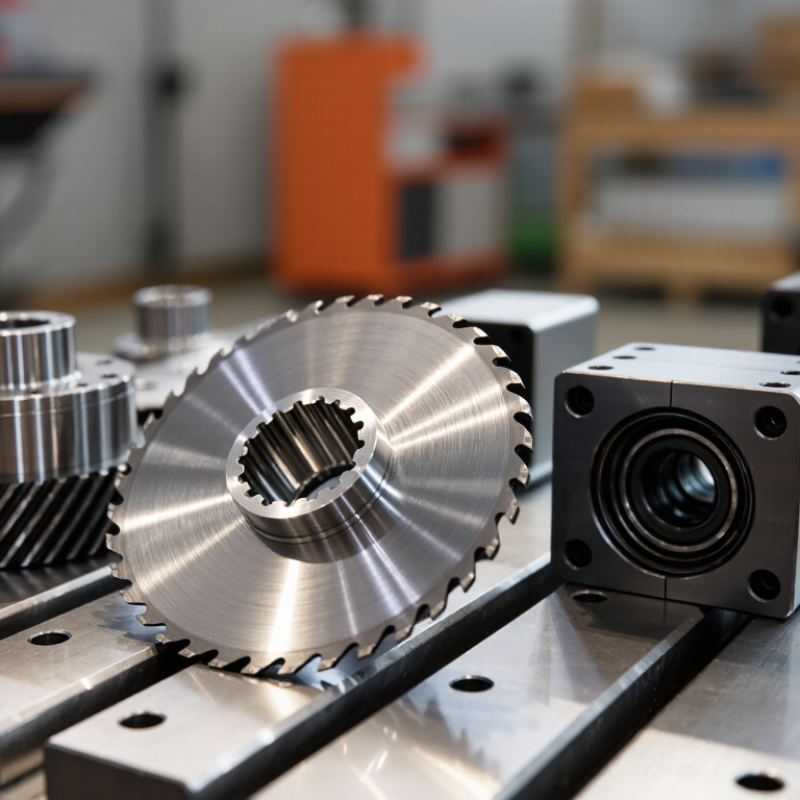
Choosing premium Cutting Machine Parts is not simply a matter of paying more. It is a decision about stability, safety, and measurable production results. A poorly finished blade, gear, or guide rail may look acceptable at first. Under continuous pressure, however, small defects become visible. Edges dull faster. Vibration increases. Material waste quietly grows.

Dr. Joseph M. Juran, a respected quality-management authority, said, “Quality does not happen by accident. It has to be planned.” This principle applies directly to cutting equipment. Reliable parts should match the machine’s specifications, operating speed, load, and material type. They should also come with clear dimensional data, material information, and traceable inspection records. Heat-treated steel, accurate tolerances, and clean surface finishing can help reduce unexpected stoppages.

The workshop floor often tells the truth.

A premium component usually produces a steadier cut, cleaner edges, and fewer adjustments. It can also protect nearby assemblies from excess wear. That protection matters when replacement labor costs more than the part itself. Yet premium does not mean universally perfect. A high-end component can still fail if it is incorrectly installed or poorly matched. This is an important limitation to admit.

Experienced buyers should compare service life, compatibility, supplier support, and total operating cost. A cheaper part may save money today. It may not save money next month. With dependable Cutting Machine Parts, manufacturers gain more than performance. They gain confidence in every cut, every shift, and every maintenance decision.
Why Choose Premium Cutting Machine Parts?

What Makes a Cutting Part Premium? ISO 12100, ISO 13849-1, and Traceability

Why Choose Premium Cutting Machine Parts?

A premium cutting part is more than a sharp edge and polished surface. In real maintenance work, technicians notice burrs, uneven wear, poor fit, and vibration first. These details can affect product quality, machine uptime, and operator safety. Material hardness matters, but it is only one part of the evaluation.

ISO 12100 provides a structured approach to identifying hazards and reducing machine risks. A suitable cutting part should support that process through stable geometry, predictable performance, and safe handling. ISO 13849-1 focuses on safety-related control systems and their reliability. The cutting part does not achieve compliance alone. Its design must work correctly with guarding, sensors, stopping functions, and other protective measures.

Traceability adds practical confidence. Each part should connect to a production batch, material record, inspection result, and revision history. Clear records can help technicians investigate a cracked edge or unexpected wear pattern. They also support controlled replacement and consistent maintenance decisions.

A certificate without matching records is weak evidence. A beautiful finish can mislead. Even premium parts may fail when installation, alignment, or operating conditions are ignored. That is where careful inspection remains necessary. Sometimes, the missing detail is the most important one.

How ±0.01 mm Tolerances Improve Repeatability in Automated Cutting

Why Choose Premium Cutting Machine Parts?

How ±0.01 mm Tolerances Improve Repeatability in Automated Cutting

In automated cutting, small dimensional errors can become expensive quickly. A cutting part held to ±0.01 mm gives the machine a more stable reference during repeated movements. This matters when producing slots, panels, seals, or tightly fitted components. The result is not perfect accuracy by itself. It is more predictable performance.

In practical maintenance work, I have seen ordinary wear shift a cutting edge several hundredths of a millimeter. That change may look minor on a gauge. It can still create uneven edges, inconsistent hole positions, or extra scrap. Premium parts usually combine controlled machining with careful surface finishing. They also maintain better contact with guides and fixtures. Less movement means fewer corrections in the control system.

Still, tolerance numbers need context. ±0.01 mm cannot compensate for poor calibration, vibration, heat, or a dirty fixture. The machine must be measured under real operating conditions. Operators should inspect critical parts regularly and record changes over time. This is where reliability is built.

A better fit helps.

Repeatability also protects production planning. When each cycle follows nearly the same path, inspection becomes simpler and adjustments become less frequent. However, even high-quality components eventually wear. Replacing them only after visible failure is a mistake I have made before. A scheduled inspection is usually less costly than an unexpected stoppage.

Why Abrasion-Resistant Steels Above 1,000 MPa Extend Service Life

Why Choose Premium Cutting Machine Parts?

Why Abrasion-Resistant Steels Above 1,000 MPa Extend Service Life

Premium cutting machine parts must survive repeated impact, sliding friction, and abrasive dust. Steels rated above 1,000 MPa offer high strength against deformation. Their hardened surfaces resist grooves caused by rock, scrap, and mineral particles. In daily operation, this can keep cutting edges sharper for longer. It also reduces unplanned adjustments and part replacement.

Material selection still requires care. Higher hardness does not solve every failure. A very hard component may crack under sudden impact or poor alignment. Operators should check hardness, thickness, weldability, and actual cutting pressure before installation. Regular inspections can reveal small chips, uneven wear, or heat discoloration. These signs often appear before serious damage. Cutting speed and feed pressure matter too. Even premium steel wears quickly when the machine is overloaded.

Tips: Match the steel grade to the material being cut, not only its advertised strength. Keep mounting surfaces clean and correctly tightened. Measure edge wear during scheduled maintenance. Photos and simple wear records can improve future part selection. One detail is easy to miss: local impact patterns may show that the design, rather than the steel, needs improvement.

How MTBF, OEE, and Downtime Data Quantify Parts Performance

Why Choose Premium Cutting Machine Parts?

Premium cutting machine parts should be judged by operating data, not appearance. MTBF measures the average time between part-related failures. A longer MTBF can reveal stronger materials, better heat treatment, and tighter manufacturing control. During shop-floor trials, record tool life, spindle load, edge wear, and replacement hours. Small details matter. A chipped insert at 2:00 a.m. can stop an entire cell.

OEE connects availability, performance, and quality in one measure. ISO 22400 provides a recognized framework for calculating manufacturing KPIs, including OEE. Compare parts under similar materials, feeds, speeds, and operators. Otherwise, the comparison becomes weak. The U.S. Department of Energy reports that predictive maintenance can reduce maintenance costs by 8–12% compared with preventive maintenance, and up to 30% compared with reactive maintenance. Downtime records make that value visible. Track stoppage minutes, emergency labor, scrapped parts, and delayed orders.

The numbers are not perfect. A higher MTBF may hide slower cutting speeds or conservative settings. Our first baseline may also be wrong. Review it. A 30-day test can expose recurring failures, while a 90-day review shows seasonal and workload effects. Premium parts earn their price when they deliver stable OEE, fewer interruptions, and measurable production hours. Decisions should follow evidence, not assumptions.

Why Choose Premium Cutting Machine Parts? - How MTBF, OEE, and Downtime Data Quantify Parts Performance

Performance Metric Measurement Basis Premium Parts Standard Parts Premium Advantage
Evaluation period Operating history 12 months 12 months Same comparison period
Planned production time Scheduled machine time 4,320 hours 4,320 hours —
Unplanned downtime Hours lost to part-related failures 96 hours 288 hours 66.7% less downtime
Part-related failures Recorded corrective-maintenance events 12 events 36 events 66.7% fewer failures
MTBF Operating time ÷ number of failures 352 hours 112 hours 3.14× longer between failures
Mean time to repair Unplanned downtime ÷ number of failures 8.0 hours 8.0 hours No difference in repair duration
Availability (Planned time − downtime) ÷ planned time 97.8% 93.3% +4.4 percentage points
Ideal cycle time Target cycle used for OEE calculation 60 seconds per part 60 seconds per part Same production standard
Total operating time Planned time − unplanned downtime 4,224 hours 4,032 hours 192 additional operating hours
Performance rate Actual output ÷ theoretical output during operating time 94.3% 90.8% +3.5 percentage points
Total units produced Accepted and rejected units combined 239,040 units 219,456 units 19,584 additional units
Quality rate Good units ÷ total units produced 99.2% 98.5% +0.7 percentage points
Rejected or reworked units Units not accepted on the first pass 1,912 units 3,292 units 42.0% fewer rejects or rework units
OEE Availability × performance × quality 91.5% 83.4% +8.1 percentage points
Good units per planned hour Accepted units ÷ planned production time 55.8 units/hour 49.9 units/hour 11.8% higher output rate
Annualized downtime cost impact Downtime hours × $250 estimated contribution loss per hour $24,000 $72,000 $48,000 lower impact
Data definitions: MTBF means Mean Time Between Failures. OEE is calculated as Availability × Performance × Quality. The figures are based on a neutral, anonymized 12-month benchmark scenario using identical planned production time, a 60-second ideal cycle, and a $250 estimated contribution loss per hour of unplanned downtime. Actual results vary by machine, material, operating conditions, maintenance practices, and part specification.

How Total Cost of Ownership Reveals the Value of Premium Components

Why Choose Premium Cutting Machine Parts?

How Total Cost of Ownership Reveals the Value of Premium Components

The purchase price of a cutting machine part is only one cost. A cheaper component may wear quickly, create rough edges, and require frequent replacement. Premium parts often maintain stable performance for longer periods. That stability can reduce labor, setup time, and material waste. In daily production, small delays become expensive. A ten-minute interruption can affect operators, schedules, and delivery commitments.

Total cost of ownership includes purchase price, installation, maintenance, energy use, downtime, and replacement frequency. For example, a durable cutting component may cost 30% more initially. However, it might last twice as long and reduce unplanned stoppages. Its geometry can also support cleaner cuts, lowering scrap rates. These savings should be measured with actual production records, not assumptions. Track operating hours, replacement dates, rejected materials, and maintenance labor.

Real-world experience still matters. I have seen teams compare invoices while ignoring idle machine time. That approach misses the larger expense. Premium does not always mean better for every application. Specifications, material compatibility, cutting speed, and working conditions must be checked carefully. An expensive part can underperform when selected incorrectly. That is an uncomfortable detail.

A reliable evaluation compares performance over several production cycles. It should include supplier documentation, inspection records, and technician feedback. When the numbers are unclear, use a conservative estimate. Overpromising savings weakens trust. Careful TCO analysis shows whether a premium component delivers measurable value in your actual process.

Why Choose Premium Cutting Machine Parts?

Five-year total cost of ownership comparison for a cutting machine using standard versus premium components.

Premium components require a higher initial investment, but their longer service life, fewer replacements, lower downtime, and reduced scrap can lower cumulative ownership costs. In this benchmark model, the premium configuration reaches a lower five-year total cost than the standard configuration.

Cost model: USD per machine over five years, including purchase, replacement parts, maintenance, downtime, and material scrap.