Leave Your Message
A Co Welding Machine can shape production speed, weld consistency, and operating costs. For global buyers, choosing a model involves more than comparing price tags. Workshops may need to join thin sheet, repair farm equipment, or fabricate structural components. Each task places different demands on output, wire feeding, and duty cycle. Small details matter.
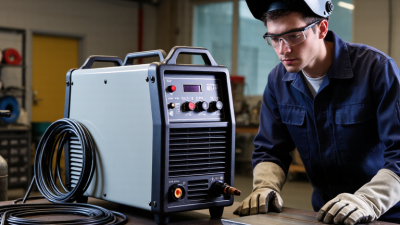
This guide explores leading CO₂ and MAG welding machine types expected to interest buyers in 2026. Compact inverter models suit mobile work and limited floor space. Transformer machines may appeal to shops prioritizing straightforward operation and familiar maintenance. Multi-process units can support varied jobs, but extra functions are useful only when operators need them. Check the nameplate. Compare rated output, input voltage, wire-feed range, torch compatibility, and stated duty cycle under realistic conditions. A high maximum amperage alone does not prove a machine can handle a long production shift.
Buyer experience also depends on practical support. Ask about spare-part availability, clear manuals, warranty terms, and training before placing an order. Confirm that the machine’s electrical requirements and gas setup fit your workshop. Supplier specifications deserve careful review; product labels and real operating results do not always tell the same story. That is worth remembering. No single type is best for every buyer, and even a promising shortlist may need testing with your own materials and operators. The sections ahead compare machine categories and key selection points, helping buyers make a more informed, application-focused decision.
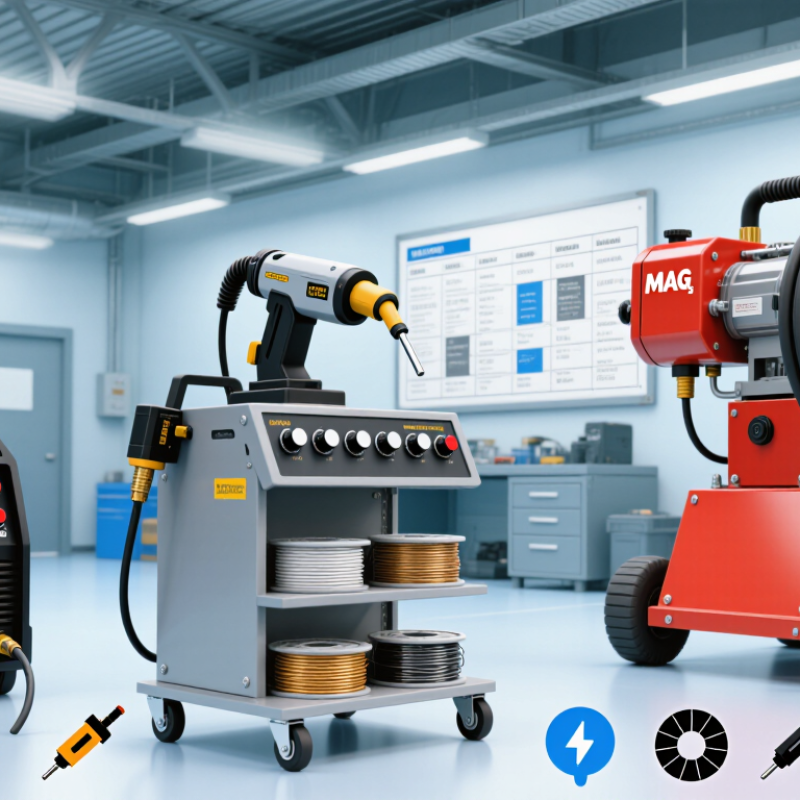
2026 Top CO Welding Machine Types for Global Buyers
What Is a CO Welding Machine and How Does It Work?
In workshop usage, a “CO welding machine” usually means a CO2 gas-shielded welding machine. It uses a continuously fed wire electrode to create an electric arc between the wire and the metal workpiece. The arc melts both, forming a weld pool as the wire advances. CO2 flows through the torch nozzle and shields the hot metal from much of the surrounding air. The arc is bright. This process is common for joining mild steel in fabrication and repair work.
Wire speed and voltage affect how the weld forms. Too much wire speed can cause spatter or an uneven bead; too little may make the arc unstable. The correct settings depend on wire diameter, metal thickness, joint position, and machine capacity. Clean surfaces help, too. Even experienced operators may need several test welds to find a steady setup, especially when changing material thickness. That trial and error is normal, not a sign that the machine is faulty.
Tips: Check the torch liner, contact tip, and gas flow before welding. Use suitable eye and hand protection, and maintain ventilation. Test settings on a scrap piece of similar metal, then inspect the bead for gaps, excessive spatter, or poor fusion. Small details matter.
| Type or Topic | How It Works | Typical Setup | Common Applications | Buyer Considerations |
|---|---|---|---|---|
| CO Welding Basics | ||||
| What “CO welding” usually means | In many markets, “CO welding” refers to gas metal arc welding (GMAW) using carbon dioxide as the shielding gas. The machine feeds a continuously consumable wire electrode through a welding gun. An electric arc melts the wire and base metal while shielding gas protects the weld area from the surrounding atmosphere. | Power source, wire feeder, welding gun, work-return lead, wire electrode, and a gas cylinder with regulator and flowmeter. | Fabrication and repair of steel components, machinery, frames, and general metalwork. | Check whether the supplier uses “CO,” “CO₂,” or “MIG/MAG” terminology. In technical usage, CO₂ is an active shielding gas, so the process is generally classified as MAG rather than MIG. |
| Typical operating sequence | When the operator pulls the trigger, the machine starts the gas flow, feeds wire, and establishes the arc. Wire-feed speed affects welding current, while voltage setting or arc-length control influences arc behavior. The operator moves the gun along the joint as the wire melts and forms the weld. | Settings depend on material thickness, joint design, wire diameter, welding position, and the selected gas. | Manual, semi-automatic, and mechanized welding. | Use the wire and gas combination specified by the welding procedure. Correct polarity, grounding, gas flow, and wire-feed tension are essential for stable operation. |
| CO₂ shielding gas | Carbon dioxide is an active shielding gas. It protects the molten weld pool and influences arc characteristics and metal transfer. Compared with common argon-rich mixtures, pure CO₂ often produces more spatter and a less smooth arc, particularly with short-circuit transfer settings. | Pure CO₂ or an approved argon–CO₂ blend, selected to suit the wire, material, and welding procedure. | Carbon and low-alloy steel welding, subject to the requirements of the application. | Confirm cylinder connections and local gas availability. Gas choice affects transfer mode, spatter, bead profile, and procedure qualification; it is not interchangeable without checking compatibility. |
| Common CO₂ / GMAW Machine Types | ||||
| Transformer-rectifier machine | A transformer changes the incoming voltage, and rectifiers convert it to welding current. Depending on the design, the machine may use fixed or stepped voltage settings. | Commonly paired with a separate wire feeder or an integrated feeder; verify input supply and output range. | Workshop fabrication and production environments where a conventional power source is suitable. | Often heavier than inverter models and may offer fewer electronic adjustment features. Compare duty cycle, output range, input requirements, and serviceability. |
| Inverter-based GMAW machine | Power electronics convert and control the electrical output at high frequency. Electronic regulation can support compact designs and more precise adjustment of welding parameters. | Available with built-in or separate wire feeders; some models support single-phase or three-phase input, depending on specification. | Portable fabrication, maintenance, workshops, and production applications, according to the machine’s rating. | Compare rated output, duty cycle, input-voltage tolerance, cooling, protection rating, and availability of qualified repair support. Features vary by model. |
| Synergic GMAW machine | A control system links parameters such as wire-feed speed and voltage. The operator selects a program and adjusts a main setting; the machine sets related parameters within the limits of that program. | Programs are specific to combinations such as wire type, diameter, shielding gas, and material. | Repeatable shop work and applications where faster setup or reduced manual parameter adjustment is useful. | Confirm that the machine’s programs match the intended wire and gas. Synergic control is a control feature, not a separate welding process or guarantee of weld quality. |
| Pulse-capable GMAW machine | The power source alternates between peak and background current to control droplet transfer. The pulse program must be matched to the wire, material, and shielding-gas combination. | Typically used with a compatible wire and an argon-rich shielding-gas mixture; suitability for pure CO₂ must be confirmed with the machine and procedure documentation. | Applications requiring controlled heat input or improved control in particular positions and materials, when supported by the selected program. | Do not assume that every pulse machine or program is suitable for pure CO₂. Check gas requirements, program availability, and operator training needs. |
| Multi-process machine with GMAW mode | One power source provides GMAW and one or more additional processes, commonly depending on the model. Each process uses its own compatible torch, accessories, and settings. | May support GMAW plus processes such as stick (SMAW) or TIG (GTAW); included accessories and capabilities vary. | Repair shops and mixed-work environments that need more than one welding process. | Verify that the GMAW mode includes the required wire feeder, gas controls, output range, and duty cycle. A multi-process label does not mean every process is included or equally capable. |
| Selection Checks for Global Buyers | ||||
| Electrical supply and compliance | Input requirements determine whether the machine can operate safely and reliably on the site’s electrical supply. | Check rated input voltage, phase, frequency, input current, plug or connection requirements, and applicable local electrical standards. | All installations and operating environments. | Specifications and certification requirements differ by destination market. Confirm them before purchase and installation. |
| Output, duty cycle, and wire compatibility | Output range and duty cycle indicate the machine’s rated welding capability under stated test conditions. Wire-feed range and feeder design affect the supported wire sizes and feeding performance. | Compare the rating plate and technical datasheet with the planned material thickness, wire diameter, and work schedule. | From light repair to sustained production, depending on the machine rating and setup. | Do not select by maximum amperage alone. Check the duty-cycle rating and test standard, and verify that the feeder supports the chosen wire type and diameter. |
| Consumables and service support | Contact tips, liners, drive rolls, nozzles, and wire are subject to wear and must be compatible with the gun and feeder. | Keep suitable consumables available and follow the manufacturer’s maintenance instructions. | Every GMAW setup. | For international purchasing, confirm spare-part availability, documentation language, warranty coverage, and local technical support. |