What is Ultrasonic Dispersion Equipment and How Does It Work?
Ultrasonic Dispersion Equipment plays a crucial role in various industries. This equipment uses high-frequency sound waves to create intense cavitation bubbles in liquids. When these bubbles collapse, they generate powerful forces that break down materials. This results in more uniform dispersions and improved product quality.
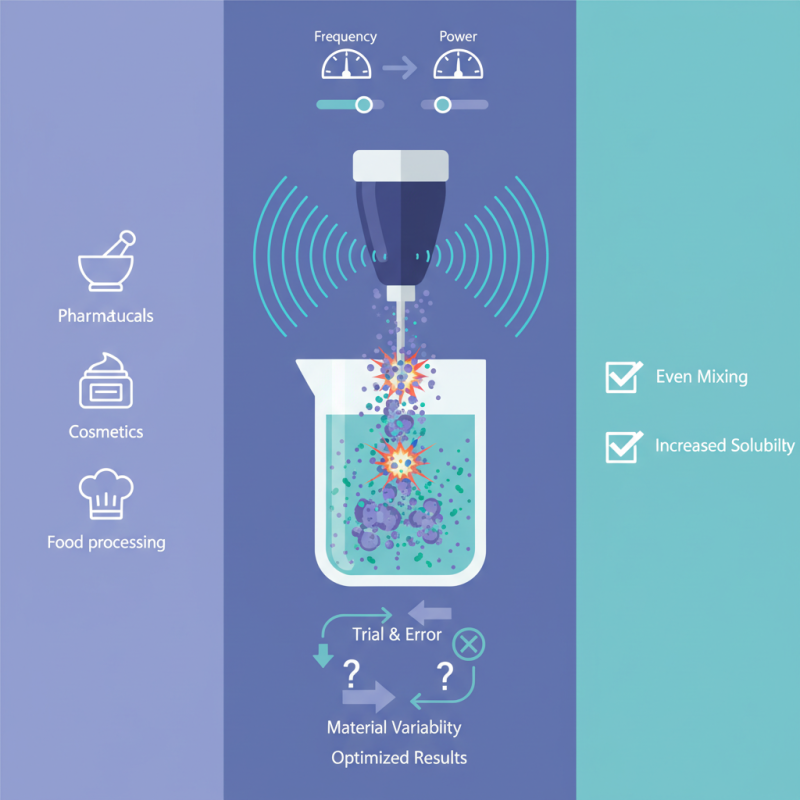
The technology finds applications in areas such as pharmaceuticals, cosmetics, and food processing. Ultrasonic dispersion ensures even mixing and increases the solubility of compounds. However, the effectiveness of the equipment can depend on several factors, including frequency and power settings. Users must understand these variables to achieve optimal results.
While the advantages are clear, there are challenges to consider as well. Not all materials respond the same way to ultrasonic treatment. Users may need to experiment to find the best approach for their specific needs. This trial-and-error process can be crucial for effective dispersion. Overall, Ultrasonic Dispersion Equipment offers both capabilities and complexities that need careful thought.
Understanding Ultrasonic Dispersion Equipment
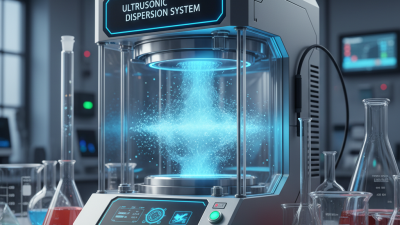
Ultrasonic dispersion equipment plays a crucial role in many industrial applications. It utilizes high-frequency sound waves to achieve fine dispersion of materials. By generating ultrasonic waves, it creates cavitation bubbles in liquids. These bubbles implode, producing powerful shockwaves that break apart particles. This process can enhance the distribution of solid particles in a liquid matrix.
The technology is often used in fields like pharmaceuticals and food production. In these areas, achieving uniformity is vital. For instance, the uniform mixing of ingredients can significantly impact product quality. The equipment can work with various materials, from pigments to biological samples. However, understanding the settings—such as frequency and power—is critical. Each application may require different parameters for optimal results.
Although ultrasonic dispersion is effective, it can also have limitations. Excessive energy may lead to overheating, which could affect sensitive materials. Operators should be aware of these factors to avoid issues. Balancing efficiency with care is essential for success in ultrasonic dispersion. This reflective approach can lead to better practices and improved outcomes in the long run.
The Principles of Ultrasonic Waves in Dispersion
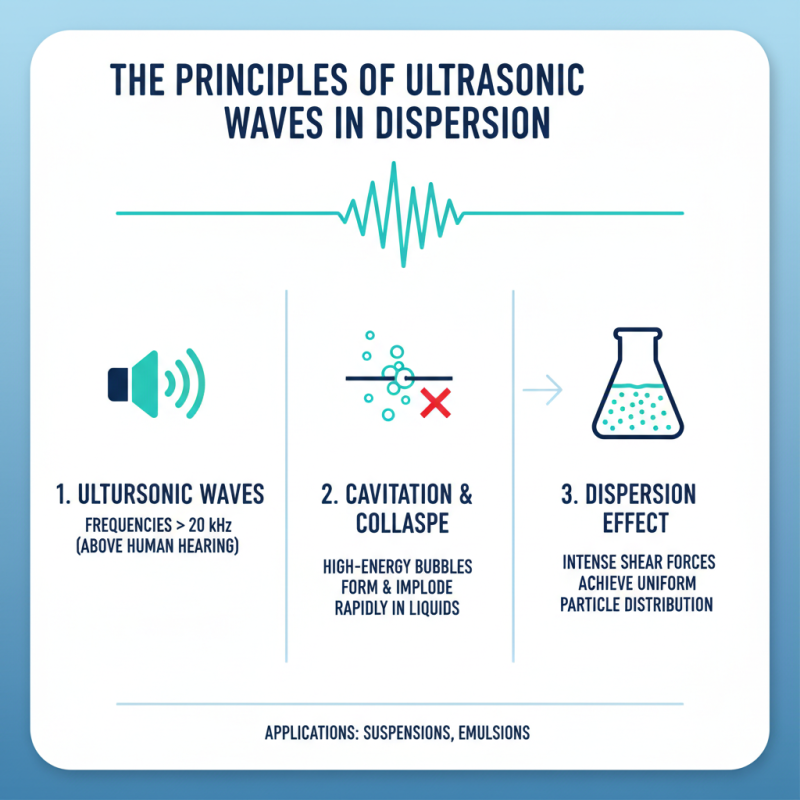
Ultrasonic waves play a pivotal role in dispersion technology. These sound waves have frequencies above the human hearing range, typically exceeding 20 kHz. When applied to liquids, ultrasonic waves create high-energy cavitation bubbles that collapse rapidly, producing intense shear forces. This process enables the effective dispersion of particles, promoting uniform distribution in suspensions or emulsions.
Data from industry reports indicate that ultrasonic dispersion techniques can enhance the stability of emulsions by reducing droplet sizes significantly. Research shows that particle sizes can shrink to as small as 100 nanometers. In industries like pharmaceuticals and cosmetics, such fine dispersions are essential for improving bioavailability and product consistency. However, achieving optimal dispersion requires careful calibration of ultrasonic power and exposure time, as excessive energy can lead to unwanted thermal effects.
While ultrasonic dispersion is highly effective, it is not universally applicable. For instance, certain materials may not respond well to ultrasonic treatment. Additionally, the equipment requires routine maintenance to ensure consistent performance. This highlights the importance of expertise in selecting appropriate applications for ultrasonic dispersion technology. The balance between efficiency and material compatibility remains a critical consideration in the industry.
Components of Ultrasonic Dispersion Equipment
Ultrasonic dispersion equipment is a specialized tool designed to create a uniform mixture of materials. Its components play crucial roles in achieving optimal results. The equipment typically includes an ultrasonic transducer, a booster, and a probe. Each part contributes uniquely to the dispersion process.
The ultrasonic transducer converts electrical energy into high-frequency sound waves. This energy creates cavitation bubbles in the liquid. These bubbles implode violently, generating powerful forces that break apart agglomerates. The booster amplifies the ultrasonic waves, ensuring that the energy reaches the liquid effectively. Meanwhile, the probe introduces the high-frequency vibrations directly into the material, enhancing the dispersion.
Tips: Always ensure proper calibration of ultrasonic equipment for accurate results. Regular maintenance is key to extending the lifespan of your system. Choosing the right frequency can significantly affect the effectiveness of the dispersion process. Balancing parameters such as time and power is essential for achieving desired outcomes in various applications. Ultrasonic dispersion can be sensitive, and slight adjustments may lead to significant differences in quality.
How Ultrasonic Dispersion Equipment Operates
Ultrasonic dispersion equipment utilizes high-frequency sound waves to mix and break down materials. The process is based on cavitation, where rapid pressure changes in a liquid create microscopic bubbles. When these bubbles collapse, they generate intense energy, effectively dispersing particles. This mechanism is crucial in applications such as emulsifying oils and dispersing powders.
When operating this type of equipment, ensure the materials are suitable for ultrasonic treatment. The choice of solvents and dispersants can impact efficiency. Pay attention to the frequency of the sound waves as different materials may require varying frequencies for optimal dispersion.
Tips: Maintain clean equipment for consistent results. Regularly check for wear and tear in the transducer, as this component is vital for effective operation. Consider conducting small test batches before large-scale production to refine your technique. Remember, the right setup and adjustment can significantly enhance the dispersion quality.
Applications and Benefits of Ultrasonic Dispersion Technology
Ultrasonic dispersion technology has transformed various industries by improving the mixing process. This technique applies high-frequency sound waves to create cavitation bubbles in liquids. The collapse of these bubbles generates intense shear forces, leading to effective emulsification and particle size reduction. The applications range from pharmaceuticals to food production and cosmetics.
For instance, in the pharmaceutical industry, ultrasonic dispersion ensures uniform distribution of active ingredients in formulations. This improves the bioavailability of drugs, making treatments more effective. In food production, it enhances emulsions, improving texture and stability without additives. In cosmetics, it allows for better blending of products, resulting in superior quality.
Tips: Regular maintenance of ultrasonic equipment is vital for optimal performance. Monitor its operation frequently to prevent potential issues. Additionally, consider the viscosity of materials when choosing ultrasonic parameters. Adjusting the intensity may yield better dispersion results. Remember that each application may require unique settings for optimal outcomes.
Ultrasonic Dispersion Equipment - Applications and Benefits
The following chart illustrates the applications of ultrasonic dispersion technology across various industries, highlighting their effectiveness in each area.