Top 10 Spray Can Nozzle Types for Efficient Application?
In the world of spray applications, the choice of a Spray Can Nozzle can significantly affect efficiency and precision. John Masters, a leading expert in industrial coatings, once stated, "The right nozzle can transform your application process." His insights emphasize how crucial a suitable nozzle is for optimal results.
Different nozzle types serve various purposes, from fine misting to heavy-duty spraying. Each nozzle design offers unique benefits that cater to specific needs. For example, fan nozzles distribute paint evenly over a surface, while round nozzles are ideal for targeted bursts.
However, not all users consider these variations. Some may overlook the importance of selecting the right nozzle type. This oversight can lead to uneven application, excessive waste, and disappointing outcomes. Understanding the nuances of each nozzle type empowers users to make informed choices, ensuring better results and efficiency. Exploring the top spray can nozzle types unlocks potential that many may not fully realize.
Top 10 Spray Can Nozzle Types for Efficient Application
Spray can nozzles are crucial for achieving efficient application. Different nozzle types cater to specific needs, impacting the spray pattern and volume. According to a recent industry report, optimized nozzle selection can improve coating efficiency by up to 30%. The wrong nozzle can waste product and create uneven finishes, leading to rework.
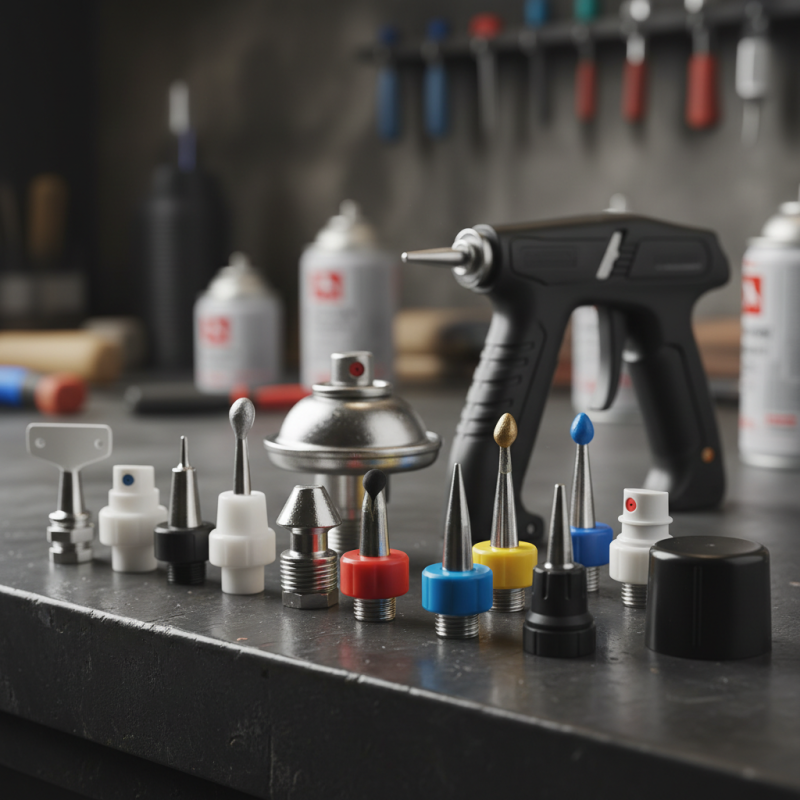
Common types include fan spray, cone spray, and mist spray nozzles. Each type serves distinct purposes. For instance, fan spray nozzles work well for large surfaces, while mist nozzles provide finer application. The material used in the nozzle, like plastic or metal, also affects durability and precision. Vulnerabilities in design may lead to clogging or inconsistent spray patterns, which can frustrate users.
Furthermore, understanding the viscosity of the paint or coating is vital. The right nozzle can maximize flow control, ensuring an accurate application. Adjusting the nozzle for different coatings might require trial and error, highlighting the complexity of the task. Users often overlook the importance of regular maintenance; dirty nozzles can diminish performance.
Top 10 Spray Can Nozzle Types for Efficient Application
Understanding the Importance of Nozzle Design in Spray Can Performance
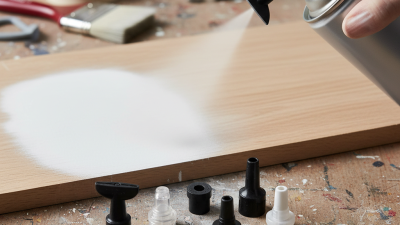
The design of spray can nozzles significantly affects their performance. Nozzle shapes and sizes dictate the spray pattern. This, in turn, influences how evenly the product applies. A fine mist is ideal for delicate surfaces. A broad spray works best for larger areas. The right nozzle enhances control and minimizes waste.
Different nozzle types serve specific applications. For example, a fan nozzle disperses paint over a wide surface. It achieves great coverage quickly. Conversely, a jet nozzle focuses the spray for precise detailing. Choosing the correct nozzle is essential for achieving desired results. However, many users overlook this aspect. They often select nozzles based on convenience rather than task requirements.
Not all nozzles work well with every material. Some can clog easily, affecting performance. Users may experience uneven application or product wastage. Regular cleaning and maintenance are crucial. Understanding these details can lead to better project outcomes. More attention to nozzle design can save both time and frustration.
Top 10 Spray Can Nozzle Types for Efficient Application
| Nozzle Type |
Application Use |
Spray Pattern |
Advantages |
| Narrow Fan Nozzle |
Detail work on small areas |
Thin strip pattern |
Precision spraying |
| Wide Fan Nozzle |
Large surface areas |
Wide spray pattern |
Quick coverage |
| Cone Nozzle |
Interior and curves |
Cone-shaped spray |
Excellent for contours |
| Adjustable Nozzle |
Versatile applications |
Variable spray width |
Customizable to needs |
| Round Nozzle |
Detailing and touch-ups |
Circular spray |
Good for fine detail |
| Flat Nozzle |
Painting walls and fences |
Flat fan pattern |
Efficient for large areas |
| Ultra Fine Nozzle |
Detailing and effects |
Very fine mist |
Superb precision |
| High Viscosity Nozzle |
Thicker paints and coatings |
Steady stream |
Handles thick materials |
| Rotary Nozzle |
Even coverage |
Rotating spray |
Consistent distribution |
| Custom Nozzle |
Specific project needs |
Tailored pattern |
Optimized for task |
Common Types of Spray Nozzles and Their Unique Features
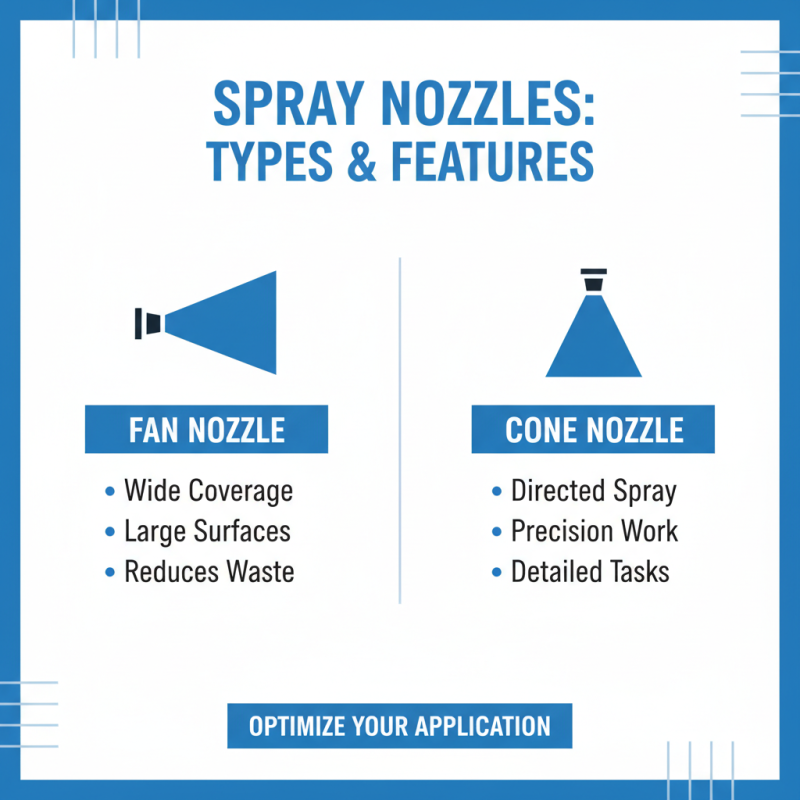
Spray can nozzles are crucial for achieving efficient application in various tasks. Different nozzle types bring unique features to the table. For instance, the fan nozzle produces a wide spray pattern, ideal for covering large surfaces quickly. This type prevents over-spray and waste, maximizing efficiency. In contrast, the cone nozzle delivers a directed spray, focusing on precision for detailed work. The ability to select the right nozzle type can significantly impact the outcome of your project.
Research shows that choosing the appropriate spray nozzle can reduce material costs by up to 20%. It’s vital to select a nozzle that matches the viscosity of your material. A standard nozzle may not perform well with thicker substances. Consider a high-pressure nozzle for thicker paints or coatings. Additionally, the adjustable nozzle is versatile, allowing users to switch between patterns effortlessly.
Tips: Always test your nozzle on a scrap surface first. This prevents mistakes on your primary workpiece. Also, keep your nozzles clean to ensure consistent performance. A clogged nozzle can lead to uneven application. Regular maintenance can improve the longevity of your spray equipment.
Comparative Analysis of Spray Patterns: Fan, Cone, and Stream Nozzles
Spray patterns are crucial for achieving a precise application.
Fan, cone, and stream nozzles serve distinct purposes. Each nozzle type offers unique advantages depending on the task at hand.
Fan nozzles are ideal for covering wide areas. They produce a flat spray pattern, perfect for painting or staining large surfaces.
Cone nozzles create a conical pattern, providing targeted application. This is useful for detailed work, like applying adhesive or sealants.
Stream nozzles emit a direct jet, suitable for reaching distant spots or applying liquids over a small area.
Tips: When using fan nozzles, maintain a consistent distance from the surface for even coverage. Adjust the pressure for better control. For cone nozzles, experiment with angles to find the most effective application. Ensure to clean the nozzles regularly to prevent clogging.
Remember that practice makes perfect. Mistakes can happen with any nozzle type. Over-spraying is common with fan nozzles, while stream nozzles can miss spots. Take time to evaluate your technique and adjust accordingly. This attention to detail enhances the overall application quality.
Material Compatibility: Choosing Nozzles for Different Chemical Applications
When selecting spray can nozzles, compatibility with the material is essential. Different chemicals interact uniquely with various nozzle materials. For example, solvent-based paints typically require nozzles made from resistant plastics or metals. Conversely, water-based formulations might not need such robust materials. Understanding the chemical nature of your paint or coating can prevent early wear and maximize efficiency.
Tips: Always test a small area first. This helps you identify any adverse reactions. Regularly check nozzles for clogs. Clogged nozzles can lead to inefficient spraying and uneven application.
Incorporating the right nozzle significantly affects the application process. An inappropriate nozzle choice can lead to dripping, uneven coverage, or high waste. Consider the viscosity of your material. Thicker materials usually need larger nozzle openings to flow properly. Additionally, using the wrong nozzle can cause frustrations and negatively impact your project timeline. Adjustments may be necessary to ensure the desired results.
Conclusion
The article "Top 10 Spray Can Nozzle Types for Efficient Application" provides a comprehensive overview of various spray can nozzle designs and their impact on performance. It emphasizes the significance of nozzle design in achieving optimal spray patterns and efficiency in diverse applications. The discussion includes common nozzle types, such as fan, cone, and stream nozzles, each offering unique features tailored for specific tasks.
Furthermore, the article delves into material compatibility, guiding readers on selecting the appropriate spray can nozzle for different chemical applications. By employing optimization techniques, users can maximize the efficiency of their spray cans, ensuring effective results in their projects. Overall, understanding the nuances of spray can nozzle types is essential for achieving the desired application outcomes and enhancing overall productivity.