Industrial spray nozzles quietly shape production quality, water use, and maintenance costs across modern factories. In China, manufacturers serve chemical processing, food production, steelmaking, agriculture, firefighting, and surface treatment. Their products may look small, but a blocked nozzle can distort a coating line within minutes.
Industry data shows why this market deserves closer examination. Grand View Research identifies industrial spraying equipment as a growing market, supported by automation, process efficiency, and stricter resource management. MarketsandMarkets also links nozzle demand with expanding industrial automation and advanced manufacturing applications. These reports indicate steady growth, although market boundaries differ between research firms. That difference matters.
This guide examines China’s top 10 Industrial Spray Nozzles manufacturers through practical and verifiable criteria. These include product range, spray-pattern control, material options, flow consistency, testing capability, export experience, and after-sales support. Manufacturing evidence matters more than attractive brochures. A stainless-steel nozzle should resist corrosion, maintain a stable spray angle, and perform consistently under defined pressure. Numbers help, but factory experience often reveals the overlooked details.
No ranking is absolute.
Some companies excel in standard hydraulic nozzles. Others specialize in air atomizing, full-cone, hollow-cone, or high-pressure designs. Certifications, laboratory records, and customer references should still be checked independently. Even established suppliers may have uneven performance across product lines. This article therefore aims to provide a useful starting point, not a final purchasing decision. Buyers should confirm drawings, operating conditions, tolerances, and compliance requirements before placing an order.
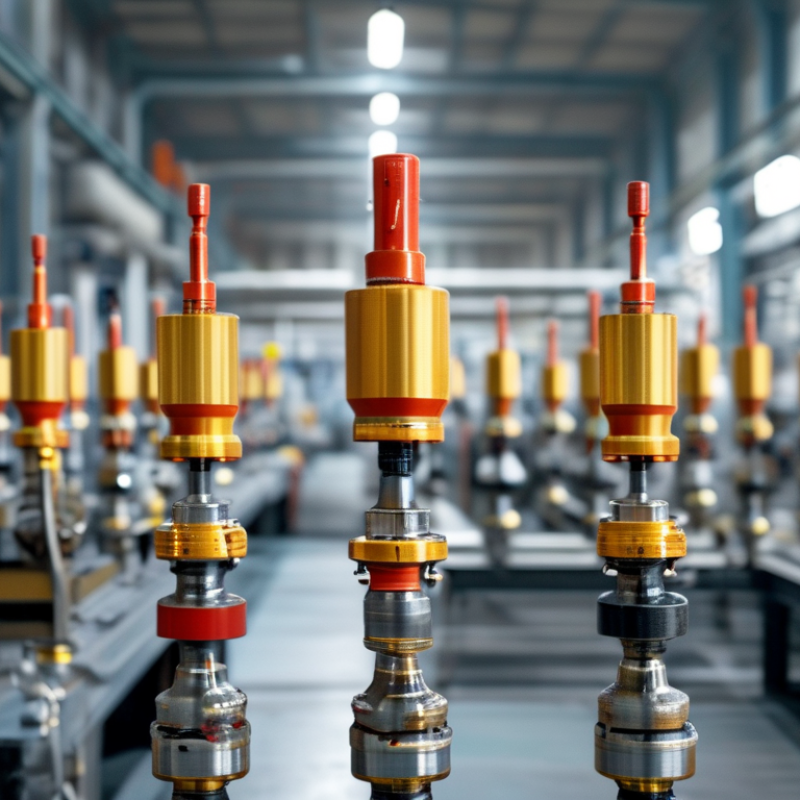
China’s industrial spray nozzle sector benefits from a powerful manufacturing ecosystem.
UNIDO’s International Yearbook of Industrial Statistics 2024 places China at about 32% of global manufacturing value added in 2023. This scale supports local supplies of stainless steel, ceramics, precision machining, and pumping equipment. Market reports from Grand View Research also indicate steady global spray nozzle growth through 2030. However, industrial-only figures remain unclear. Some studies combine agricultural, sanitary, and process applications.
The top-ten question should not rely on factory size alone. Chinese manufacturers commonly supply nozzles for steel descaling, coating lines, chemical cooling, dust control, and food-process cleaning. Field experience shows that spray angle, flow stability, wear resistance, and droplet distribution affect operating costs. ISO 9001 certification supports traceability, but it does not replace performance evidence. Buyers should request pressure-flow curves, material certificates, spray-pattern tests, and samples tested with real water quality. Small differences can matter. The data is useful, but imperfect.
Tips:
Compare performance at your working pressure, not a convenient showroom setting. Check clogging after continuous operation. Ask about replacement lead times and dimensional inspection records. Independent testing is wise for demanding applications. A cheaper nozzle may consume more water, energy, and labor. That cost is easy to overlook.

When comparing China’s top ten industrial spray nozzle manufacturers, evaluate evidence, not polished websites. In my procurement experience, a reliable supplier explains flow rate, spray angle, pressure, and material limits clearly. Vague answers deserve caution.
Request production samples and inspect the spray pattern under your actual pressure. Measure droplet consistency, thread accuracy, and resistance to your operating fluid. Ask for material certificates, inspection records, and test data from recent batches. A documented quality system, such as ISO 9001 certification, is useful, but certificates should be independently verified. Factory photos are not enough. Arrange a video audit or an on-site inspection when order value justifies it.
Supplier communication reveals practical capability. Engineers should respond with drawings, tolerances, and a realistic delivery plan. Ask how rejected parts are isolated and how corrective actions are recorded. Check whether packaging protects small orifice openings from dust and impact. I once focused too heavily on unit price and overlooked replacement lead time. That mistake increased downtime. Cost is only one variable. Also compare tooling fees, sample charges, spare-part support, and payment protection. Some evaluations remain uncertain because test conditions differ between suppliers. Record every assumption, then request comparable testing before approving production.
China’s Top 10 Industrial Spray Nozzle Manufacturers
China’s industrial spray nozzle sector includes manufacturers serving cooling, cleaning, coating, dust control, and fire-protection applications. A credible top-ten selection should consider material quality, machining accuracy, flow consistency, and technical support. It should not rely on factory size alone. Some suppliers specialize in stainless steel nozzles, while others focus on ceramic, plastic, or carbide designs. This difference matters when spray pressure, temperature, and chemical exposure change.
From practical purchasing experience, strong manufacturers usually provide performance data, sample testing, and clear dimensional drawings. They can explain spray angle, droplet distribution, flow rate, and pressure limits without vague promises. Reliable factories also maintain inspection records and communicate production tolerances. Still, “top” is not permanent. A supplier may perform well for cooling systems but poorly for abrasive media. That point is easy to overlook.
Tips: Ask for a sample before bulk production. Compare spray patterns at your operating pressure. Check thread accuracy and sealing surfaces. Request material certificates when corrosion resistance matters. Visit the production site if the order is important. Online photos are useful, but they cannot prove nozzle performance. I would also review packaging quality, replacement support, and response time. One mistake remains common: choosing the lowest price before confirming actual flow data.
Common industrial spray nozzle technologies represented across leading Chinese manufacturers
The chart presents a company-neutral capability comparison based on the availability of widely used industrial nozzle technologies. Flat-fan, full-cone, hollow-cone, and air-atomizing designs are commonly applied in cooling, cleaning, coating, dust suppression, combustion, and process control systems.
Comparing China’s top ten industrial spray nozzle manufacturers requires more than checking catalog prices. In field evaluations, material selection often predicts service life.
Stainless steel suits corrosive liquids and repeated cleaning. Brass performs well in general water applications, but it may struggle with aggressive chemicals. Ceramic inserts resist abrasion from mineral-filled fluids. Engineering plastics reduce weight and cost, although heat limits require careful review.
Spray technology changes the process result. Hydraulic nozzles create patterns through liquid pressure. Air-assisted designs produce finer droplets for coating and humidification. Full-cone models cover tanks and conveyors evenly. Flat-fan versions support washing and surface treatment. Atomizing nozzles can improve transfer efficiency, but they need stable air and liquid pressure.
Small pressure changes matter.
Application fit should guide the comparison. Food-processing lines need hygienic surfaces and easy inspection. Steel plants usually demand wear resistance under hot, dusty conditions. Agricultural equipment requires uniform coverage and reliable flow control. Wastewater systems often need large passages to reduce clogging.
Ask for flow curves, spray-angle data, material certificates, and test samples. Real test data is more useful than attractive claims.
It is not perfect. Some published performance figures use ideal laboratory water, while factory fluids contain solids, heat, or chemicals. A practical buyer should test the nozzle under actual operating conditions before approving production.
Selecting the right Chinese spray nozzle manufacturer requires more than comparing catalog prices. Start with your process conditions: liquid type, pressure, temperature, flow rate, and spray angle. A nozzle that performs well in water may fail with abrasive slurry or viscous coating.
Ask for material certificates and dimensional drawings. Stainless steel, ceramic, and engineered plastics behave differently under heat and chemical exposure. Request sample nozzles and test them using your actual pump settings. Check droplet pattern, flow consistency, clogging resistance, and thread accuracy. Small errors matter.
Inspect the manufacturer’s quality process before placing a large order. Reliable factories can explain incoming material checks, machining tolerances, cleaning procedures, and final inspection records. A video audit helps, but an independent factory visit offers stronger evidence. Ask how rejected parts are handled. Their answer reveals discipline.
Communication is another practical test. Can the engineering team understand your spray target and installation limits? Can they provide a clear drawing within a reasonable time? Be cautious when every answer sounds perfect. Real production has limits, and honest suppliers explain them. I have seen buyers focus heavily on unit price, then face uneven spray coverage and expensive line adjustments. That mistake is easy to repeat. Confirm packaging, spare parts, lead time, warranty terms, and technical support in writing before approving production. Supplier evaluation should continue after delivery, using inspection data from your own equipment.
| No. | Selection Dimension | Recommended Data to Compare | Practical Technical Reference | How to Verify a Chinese Manufacturer |
|---|---|---|---|---|
| 1 | Nozzle Application Scope | Cooling, washing, spraying, humidification, dust suppression, or coating | The nozzle type should match the fluid, pressure, temperature, target surface, and required spray pattern. | Request application drawings, process parameters, and previous test samples for similar operating conditions. |
| 2 | Flow-Rate Accuracy | Flow rate at a specified pressure, temperature, and fluid density | For the same hydraulic nozzle geometry, flow rate generally changes approximately with the square root of pressure: Q₂ ≈ Q₁ × √(P₂/P₁). | Compare laboratory flow-test reports with calibrated meters and clearly stated test conditions. |
| 3 | Spray Pattern | Full cone, hollow cone, flat fan, solid stream, or air atomizing | Actual spray angle varies with pressure, distance, fluid properties, and nozzle design; catalog angles should not be treated as universal values. | Ask for spray-pattern photographs or distribution charts produced at the intended operating pressure. |
| 4 | Droplet-Size Data | Dv10, Dv50, Dv90, or another clearly defined droplet-size value | Droplet size depends on pressure, liquid viscosity, surface tension, nozzle design, and atomizing-air conditions. | Require the measurement method, instrument type, test distance, liquid properties, and operating pressure. |
| 5 | Material Selection | Stainless steel, engineering plastic, ceramic, carbide, or elastomer options | 316 stainless steel generally provides better resistance to chloride environments than 304 stainless steel, while chemical compatibility remains fluid-specific. | Request material certificates and confirm compatibility with the actual chemical concentration and temperature. |
| 6 | Pressure and Temperature Rating | Maximum allowable pressure and temperature for the complete assembly | The lowest-rated component, such as a seal, connection, or insert, determines the practical system limit. | Check pressure-temperature charts, seal specifications, and hydrostatic or functional test records. |
| 7 | Dimensional Compatibility | Thread type, connection size, insertion depth, mounting dimensions, and sealing method | Metric and inch threads are not automatically interchangeable; thread form, pitch, diameter, and seal design must all match. | Review dimensioned drawings and verify critical dimensions with inspection equipment before mass production. |
| 8 | Manufacturing Quality Control | Incoming inspection, machining control, dimensional inspection, flow testing, and final inspection | A quality certificate alone does not prove nozzle performance; process records and product-specific inspection data are also important. | Request sample inspection reports, calibration records, process-control documents, and traceability procedures. |
| 9 | Customization Capability | Custom orifice size, spray angle, connection, material, coating, and mounting configuration | Changing an orifice or internal passage can affect flow rate, pressure drop, spray angle, and droplet distribution. | Evaluate engineering drawings, prototype capability, sample lead time, and documented design-change control. |
| 10 | After-Sales and Supply Reliability | Replacement-part availability, batch consistency, packaging, lead time, and technical support | Nozzle wear can change flow rate and spray distribution; abrasive fluids typically accelerate wear compared with clean water. | Confirm spare-part identification, batch records, packaging standards, response procedures, and long-term supply arrangements. |
Note: Product performance should be compared only under equivalent test conditions, including pressure, fluid properties, temperature, mounting position, and measurement method.