Why Invest in a Thin Film Coating Machine for Your Business?
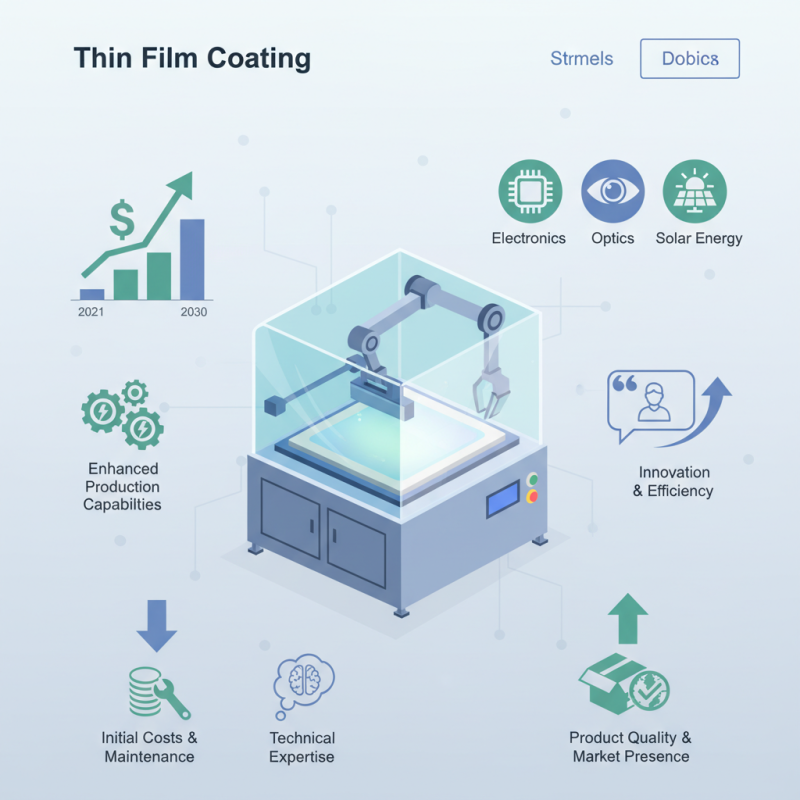
In today's competitive market, investing in a Thin Film Coating Machine can significantly enhance production capabilities. The global thin film coatings market size was valued at USD 16.7 billion in 2021 and is projected to reach USD 39.5 billion by 2030, according to a recent industry report. This growth reflects the increasing demand for advanced materials in sectors like electronics, optics, and solar energy.
Expert Dr. Samuel Hayes, a leading figure in thin film technology, states, “Embracing cutting-edge coating technologies can elevate your business to new heights.” This sentiment resonates across various industries aiming for innovation and efficiency. While the benefits of a Thin Film Coating Machine are clear, companies must critically assess their specific needs and potential return on investment.
Challenges do exist. The initial costs and maintenance of these machines can be daunting. Additionally, companies must ensure they have the technical expertise to operate such advanced equipment. Nonetheless, with the right strategy and commitment, investing in a Thin Film Coating Machine could drive significant benefits in both product quality and market presence.
Understanding Thin Film Coating Machines and Their Applications
Thin film coating machines are essential tools in various industries. They apply a thin layer of materials to surfaces, enhancing properties like durability and appearance. These machines can be found in electronics, optics, and even the automotive sector. Their versatility makes them valuable for businesses looking to improve product performance.
Understanding the applications of thin film coating can help you decide if this investment is right for your business. For instance, in the electronics industry, they are used to produce semiconductors and solar cells. This technology enables efficient energy conversion. In optics, coatings improve light transmission and reduce glare, which is crucial for high-quality lenses.
Despite their advantages, using these machines is not without challenges. Achieving uniform coating can be tricky. Variations in temperature or material can lead to inconsistent results. Businesses must regularly evaluate their processes to mitigate these issues. Investing in training and maintenance is also crucial. This ensures operators understand the equipment and remain aware of best practices.
Benefits of Investing in Thin Film Coating Technology for Businesses
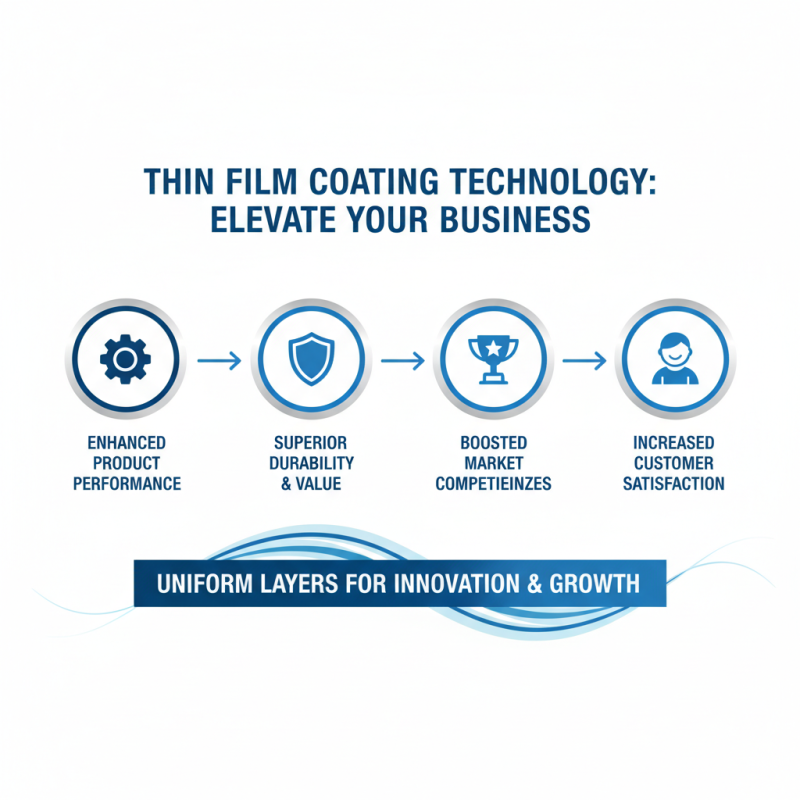
Investing in thin film coating technology can elevate your business in numerous ways. This technology creates a uniform layer on surfaces, enhancing product performance. It provides excellent durability, adding value to your offerings. Companies often notice better market competitiveness after employing such machines. Customers appreciate the improved quality, leading to increased satisfaction.
Thin film coatings also open doors to innovative applications. They can improve optical, electrical, and chemical properties of products. For example, in electronics, these coatings can help with heat resistance. In packaging, they can ensure better barrier properties. However, businesses must remember that utilizing this technology requires careful planning and skilled personnel.
Moreover, there is the challenge of initial costs. While investing in a thin film coating machine pays off over time, upfront expenses can be daunting. Companies need to weigh these factors against potential benefits. Reflection on the cost versus the technology's advantages is essential. Like any new system, proper training and understanding are fundamental to success.
Key Features to Consider When Choosing a Thin Film Coating Machine
Investing in a thin film coating machine can enhance your production capabilities significantly. When selecting one, consider key features that will ensure optimal performance. First, the coating thickness control is crucial. Precise control allows for uniform application on diverse substrates. Studies show that even a slight variation can affect product functionality and market acceptance, with 30% of clients noting issues related to inconsistent thickness.
Next, look for machines with versatile deposition methods. This flexibility can accommodate a variety of materials, catering to the shifting demands of the market. The global thin film coating market is projected to grow at a CAGR of 5% by 2027. Investing in a machine that can adapt will help your business stay competitive.
Tip: Always review the maintenance requirements. Poor maintenance can lead to reduced efficiency and increased downtime. A machine that is easy to clean and maintain can save you time and money in the long run.
Finally, don’t overlook the software interface. A user-friendly control interface can reduce training time for operators. Complicated systems often lead to operator errors. Keep in mind that the learning curve can impact productivity.
Tip: Test the machine in real-world scenarios before making a purchase. Real-life performance may differ from what specifications suggest. This thorough evaluation can prevent future regrets.
Cost Analysis: Weighing Initial Investment Against Long-term Gains
Investing in a thin film coating machine can initially seem daunting. The upfront costs can range significantly, often starting from $100,000. This investment is not just a purchase; it's a commitment to enhancing product quality. For example, in the optical industries, thin films can improve anti-reflective properties, which can increase product value by up to 20% depending on the application.
Over time, companies can expect substantial returns. A report from the Coating Association indicates that businesses equipped with advanced coating technology can reduce material waste by over 30%. This efficiency translates directly into cost savings. Additionally, improved product durability can enhance customer satisfaction. A satisfied customer is likely to return. This return on investment may take two to three years, but the long-term gains often justify the initial spend.
However, this transition is not without challenges. The technology may require staff training and adjustments in manufacturing processes. These factors can temporarily disrupt operations. Companies must weigh these risks against potential rewards. In some cases, companies have noted delays in integrating new systems, which can lead to temporary financial strain. Yet, the prospects of improved margins highlight the importance of carefully considering this investment.
Cost Analysis of Thin Film Coating Machine Investment
Future Trends in Thin Film Coating Technologies and Market Demand
The thin film coating industry is evolving rapidly.
According to a recent report by MarketsandMarkets, the global thin film coatings market is projected to reach
$15.5 billion by 2027. This growth can be attributed
to increasing demand across various sectors, including electronics, automotive, and
renewable energy. Companies are investing heavily in advanced coating technologies to enhance product
performance and durability.
One recent trend is the integration of nanotechnology into coating processes. This innovation allows for the
creation of thinner and stronger layers, improving properties like scratch resistance and thermal stability.
However, the complexity of these processes can present challenges. Not all businesses have the capability to
implement such technologies effectively. There is a learning curve involved, and successful
adaptation requires time and investment.
Market demand reflects a significant shift towards sustainable practices. Consumers and industries are now
prioritizing eco-friendly coatings. A report from Allied Market Research highlights that demand for green
coatings will grow at a rate of 10% annually.
Companies that overlook this trend might find themselves at a disadvantage. As the market evolves, there is a
pressing need to stay informed and agile.